


Meniscus Injury
Signs, Causes, Treatment and How Chiropractic Care May Help
A meniscus injury is a common cause of knee pain, particularly after a twisting movement or sports injury. However, meniscus problems can also develop gradually as the knee changes with age. Understanding the signs and symptoms of a meniscus injury can help you know when it is time to have your knee assessed.
At Aston Manor Chiropractors, we believe that understanding your knee is an important part of looking after it. This guide explains what the meniscus is, what can cause an injury, common symptoms, what you can do at home, when further assessment may be necessary, and where chiropractic care may fit into a conservative treatment approach.
What is the meniscus?
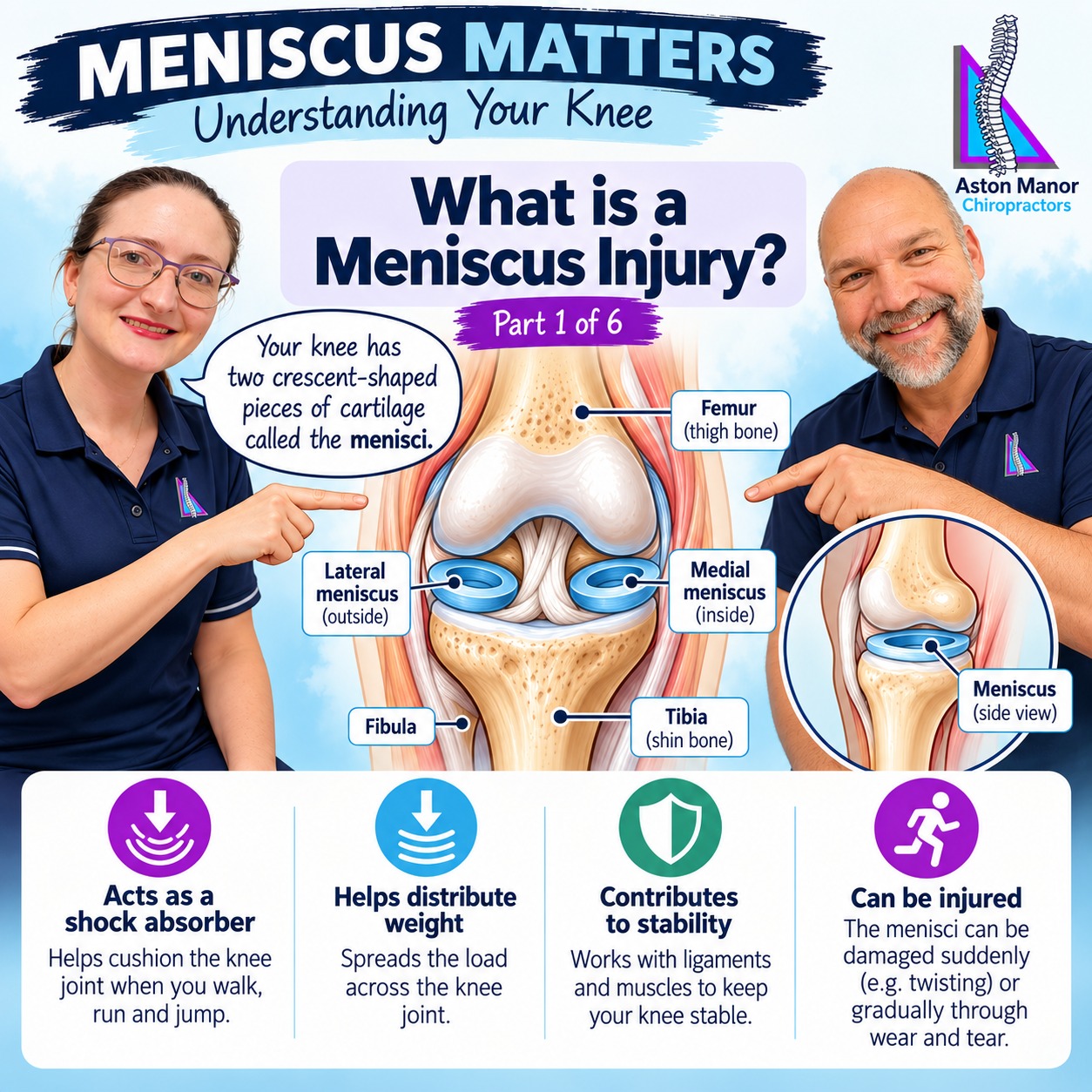
Each knee contains two menisci: the medial meniscus, on the inside of the knee, and the lateral meniscus, on the outside.
These crescent-shaped pieces of cartilage sit between the femur (thigh bone) and tibia (shin bone). They help distribute loads through the knee, absorb shock and contribute to joint stability.
Think of the menisci as cushions that help the knee cope with the forces placed on it during everyday activities such as walking, climbing stairs, squatting and exercising.
What is a meniscus tear?
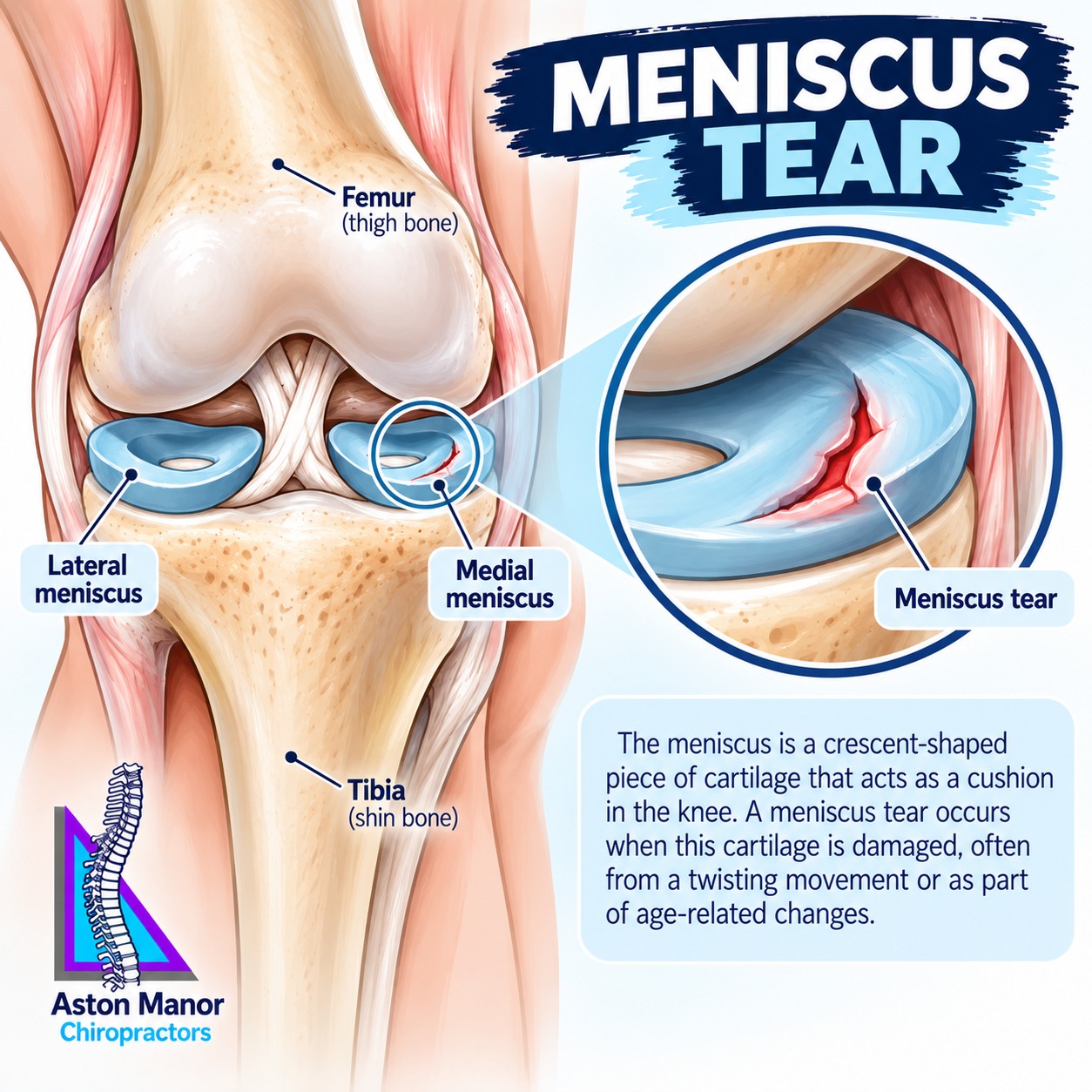
A meniscus tear occurs when the cartilage is damaged. This can happen suddenly following an injury, or gradually as the tissue becomes less resilient over time.
Acute meniscus injuries
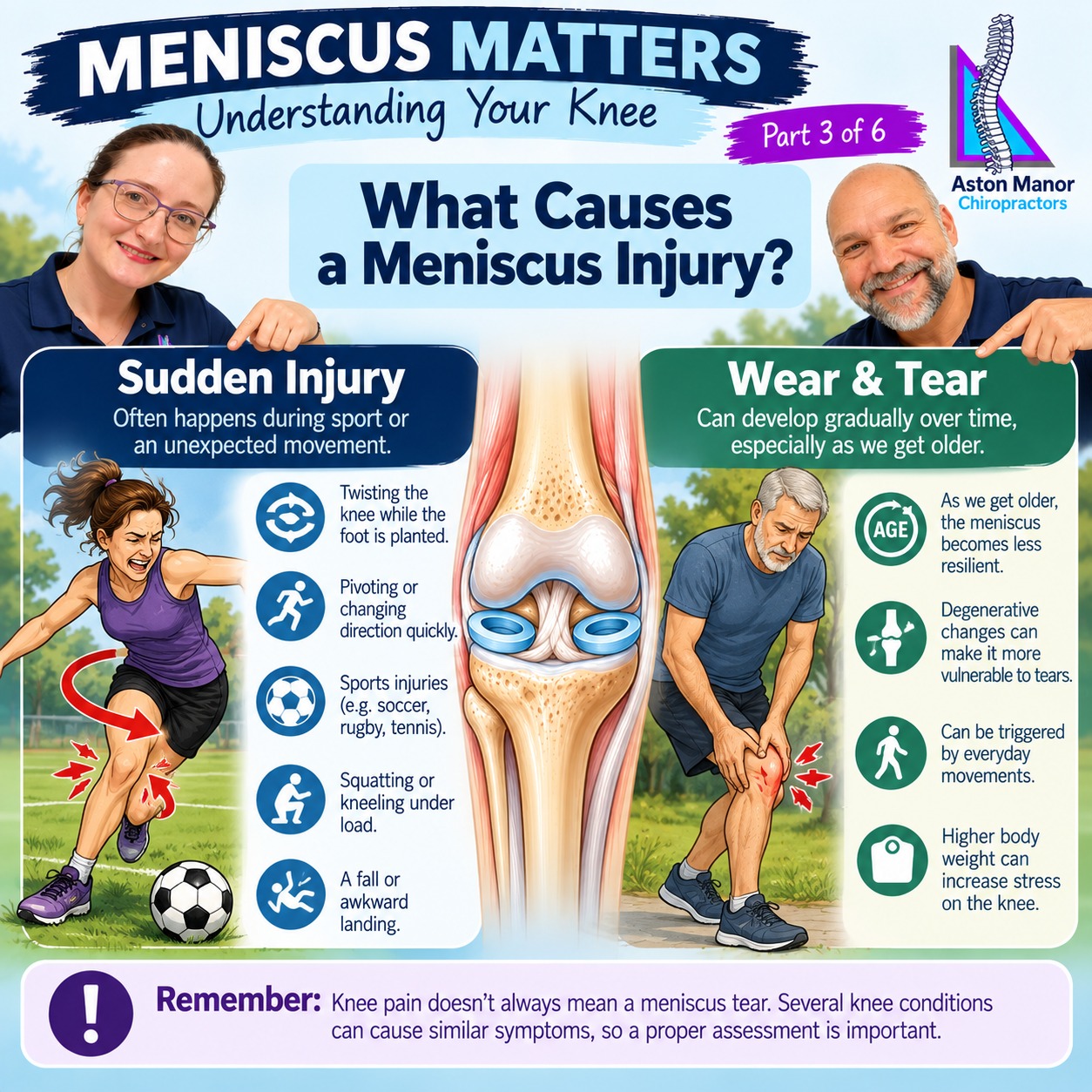
A sudden meniscus tear can occur when the knee twists or pivots while the foot is planted. Sports involving rapid changes of direction can place particular stress on the knee. A fall, awkward landing or loaded squat can also cause an injury.
Degenerative meniscus changes
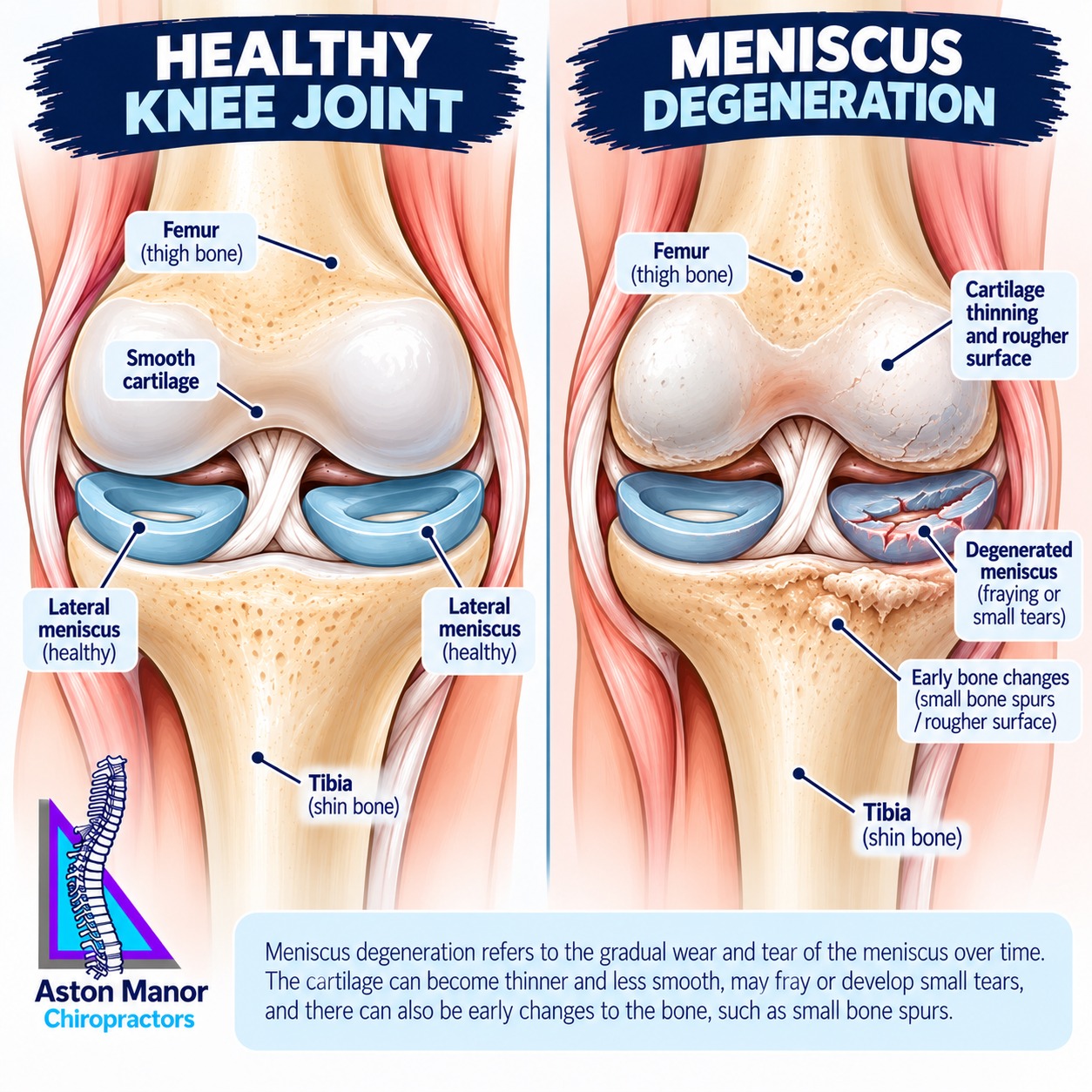
Meniscus problems do not always follow one obvious injury. As we age, the meniscus can undergo degenerative changes and become more susceptible to tearing. Some people may develop symptoms during an ordinary movement without remembering a particular injury.
Importantly, finding a meniscus tear on an MRI does not automatically mean that the tear is responsible for someone's pain. Some meniscal tears can be present without causing symptoms.
What are the symptoms of a meniscus injury?
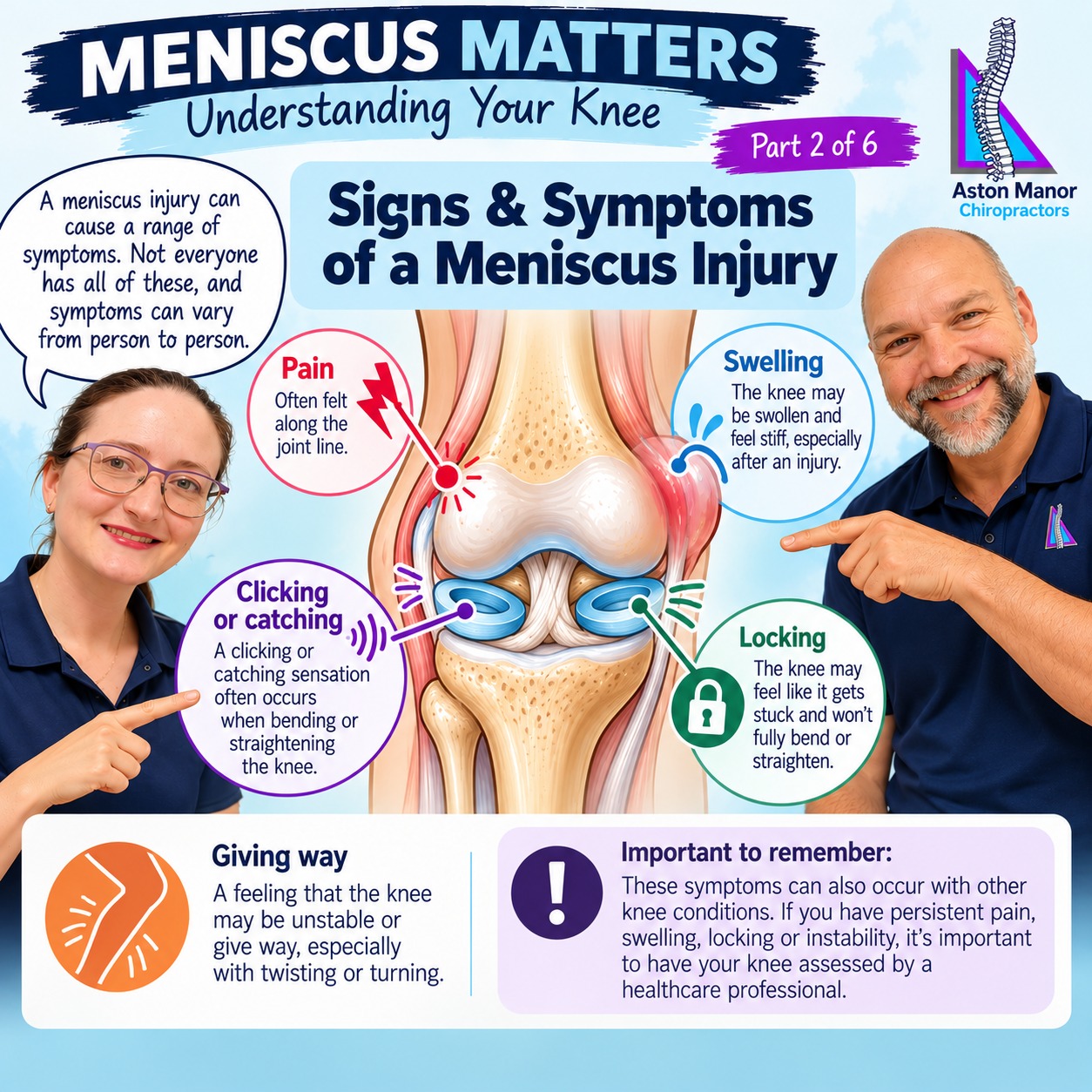
Symptoms can vary depending on the type and location of the injury.
Common symptoms include:
Swelling does not necessarily appear immediately and may develop several hours or even days after an injury.
It is also important to remember that these symptoms are not exclusive to meniscus injuries. Ligament injuries, osteoarthritis and other knee conditions can produce similar symptoms.
What causes a meniscus injury?
Can you prevent a meniscus injury?
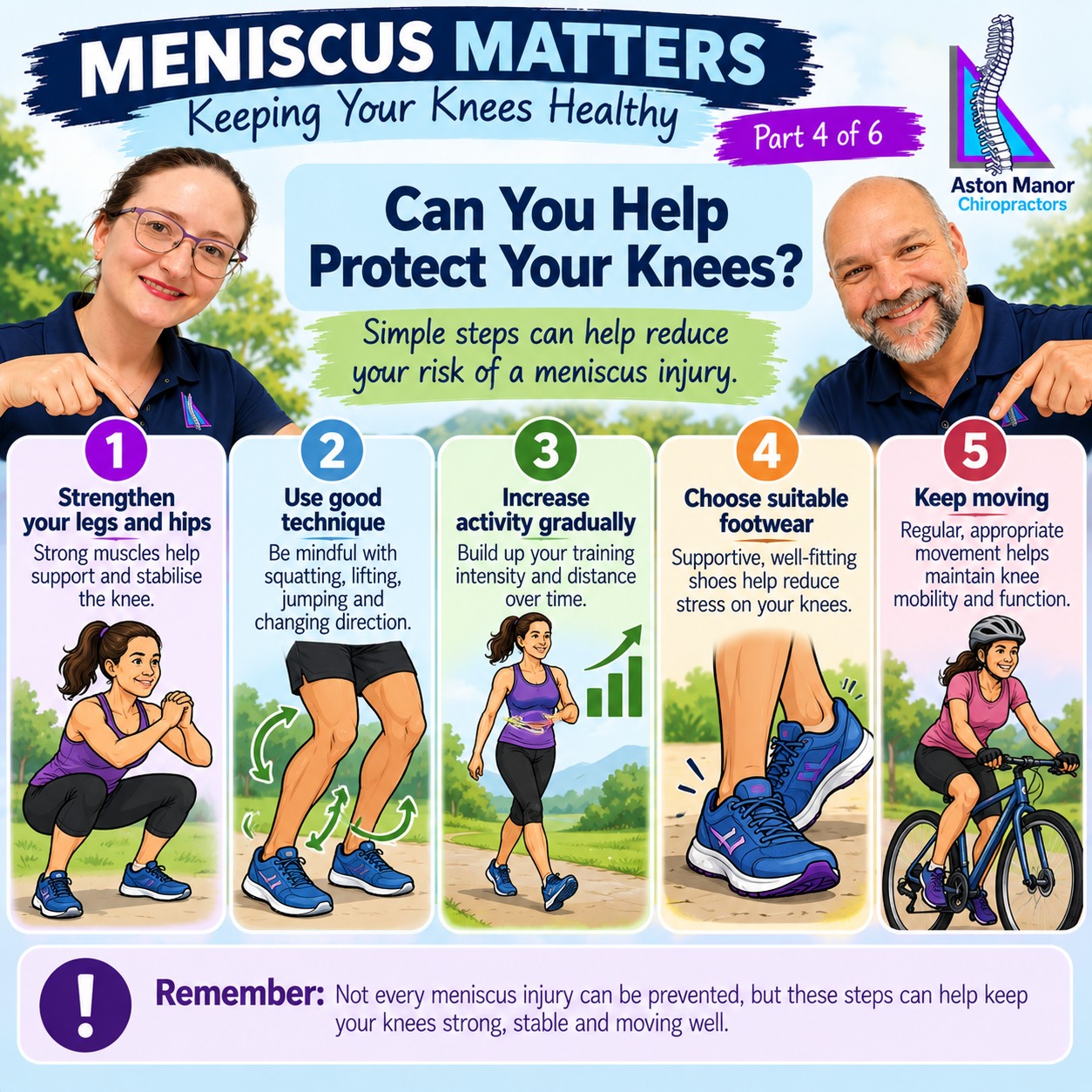
Not every meniscus injury can be prevented, but looking after the muscles and movement around your knee can help you maintain good function.
Consider:
What should you do if you think you have injured your meniscus?
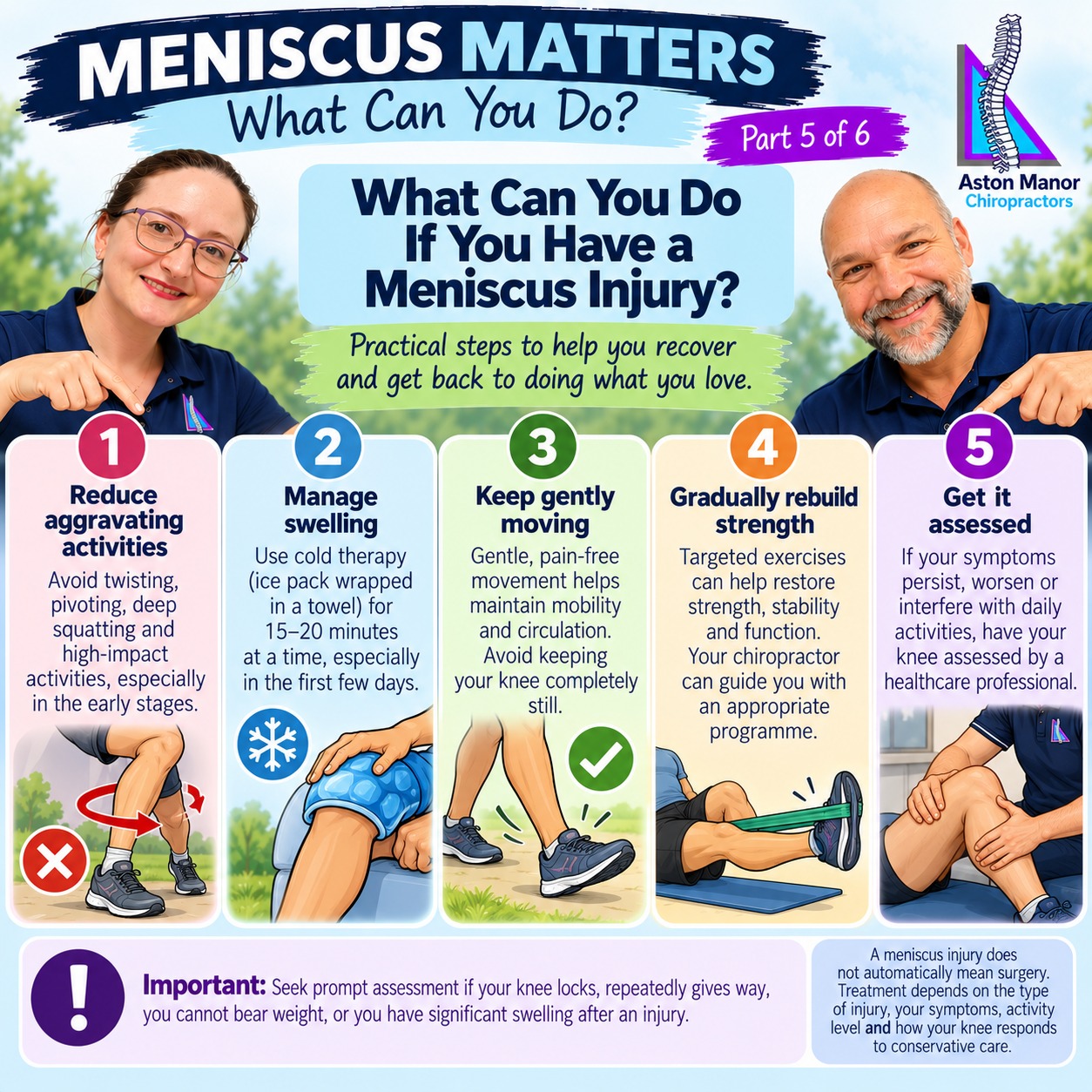
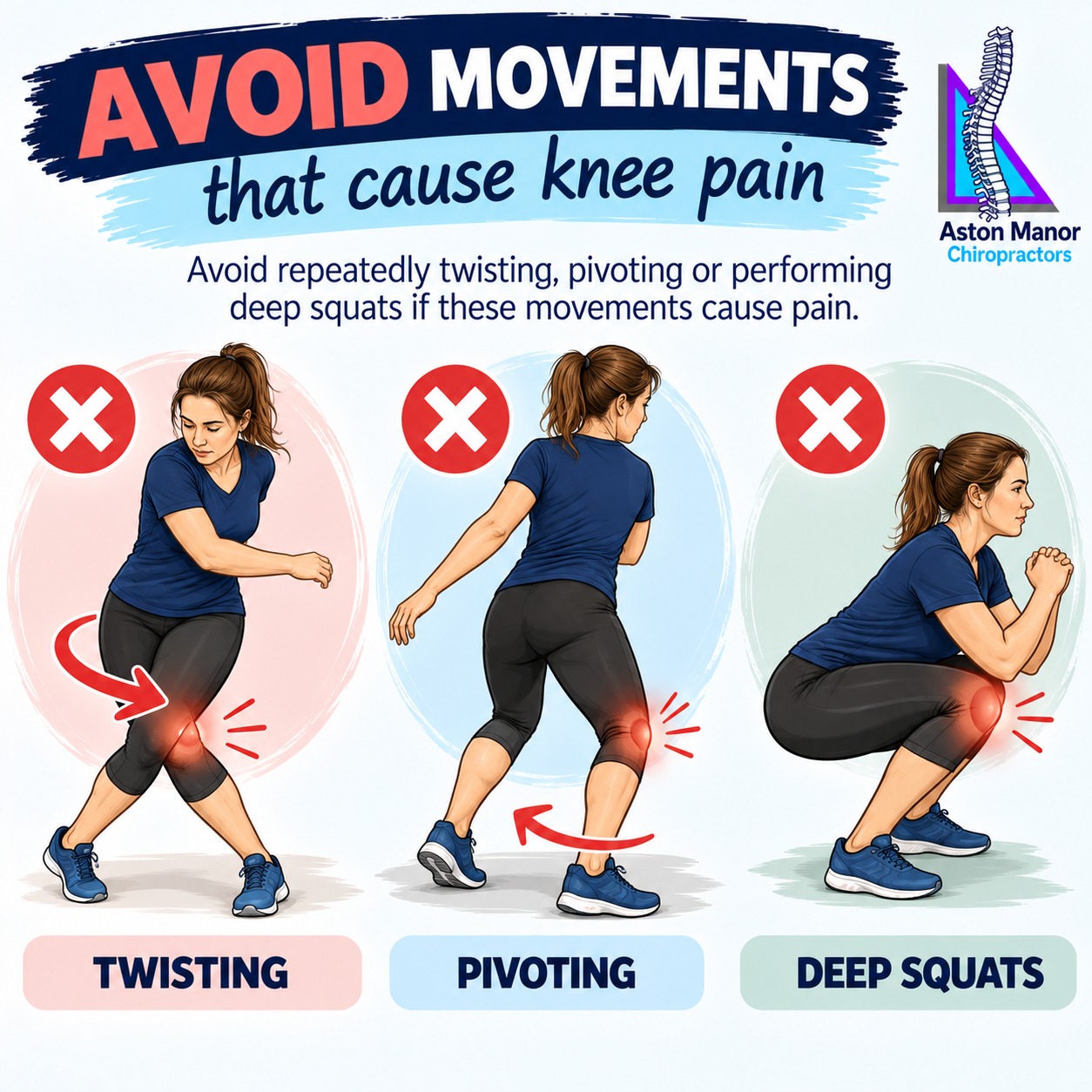
If your knee has recently been injured, initially reducing activities that aggravate your symptoms can be helpful.
Cold therapy may help with short-term pain and swelling. The NHS recommends using an ice pack wrapped in a towel for up to 20 minutes at a time. After the initial period of rest, gentle movement is generally preferable to keeping the knee completely immobile.
As symptoms settle, rehabilitation can focus on gradually restoring:
For many people, non-surgical management is an important part of treatment. Exercise-based rehabilitation is particularly well supported for degenerative meniscal problems.
Does a meniscus tear always need surgery?