
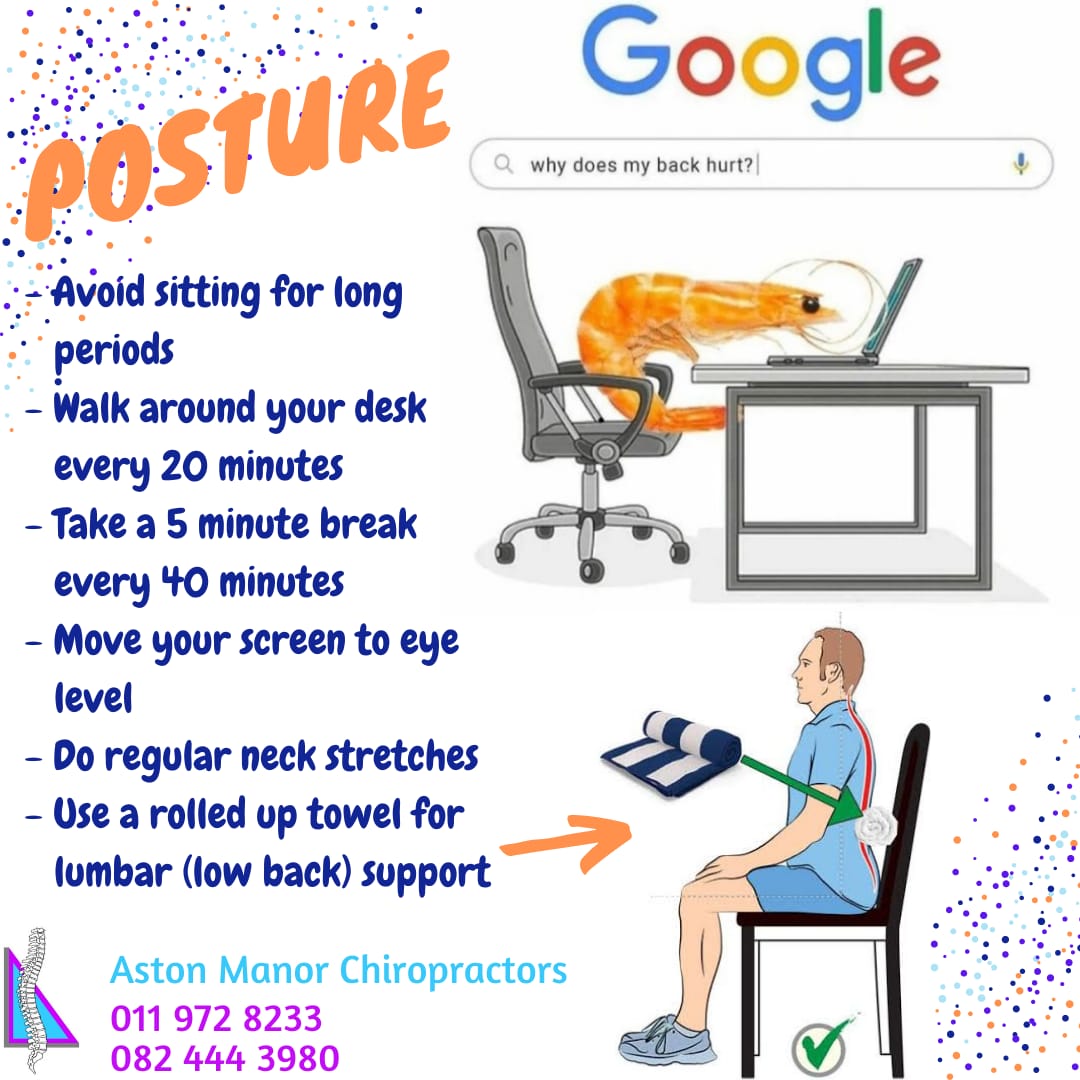

How to Set Up Your Workstation for Better Posture
Whether you spend hours at a computer, sewing, crafting, reading, doing paperwork, painting, working at a workbench or pursuing a favourite hobby, the way you set up your workspace can have a big effect on your posture.
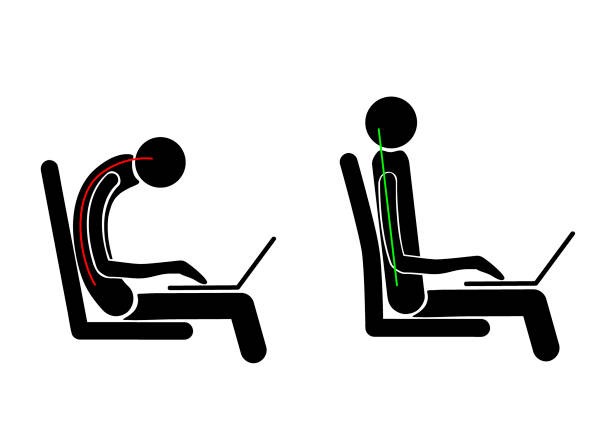
A poorly arranged workstation can encourage you to slouch, round your shoulders, crane your neck forward or twist your body for long periods. Over time, this may contribute to neck pain, shoulder pain, upper back pain, lower back pain, headaches and muscle tension.
The good news is that you don't need a perfect posture all day. The goal is to create a workspace that allows your body to stay in a comfortable, supported position — and to change position regularly.
What Does Good Posture Look Like?
Good posture is not about sitting or standing completely rigidly. Your body should be relaxed, supported and reasonably well aligned.
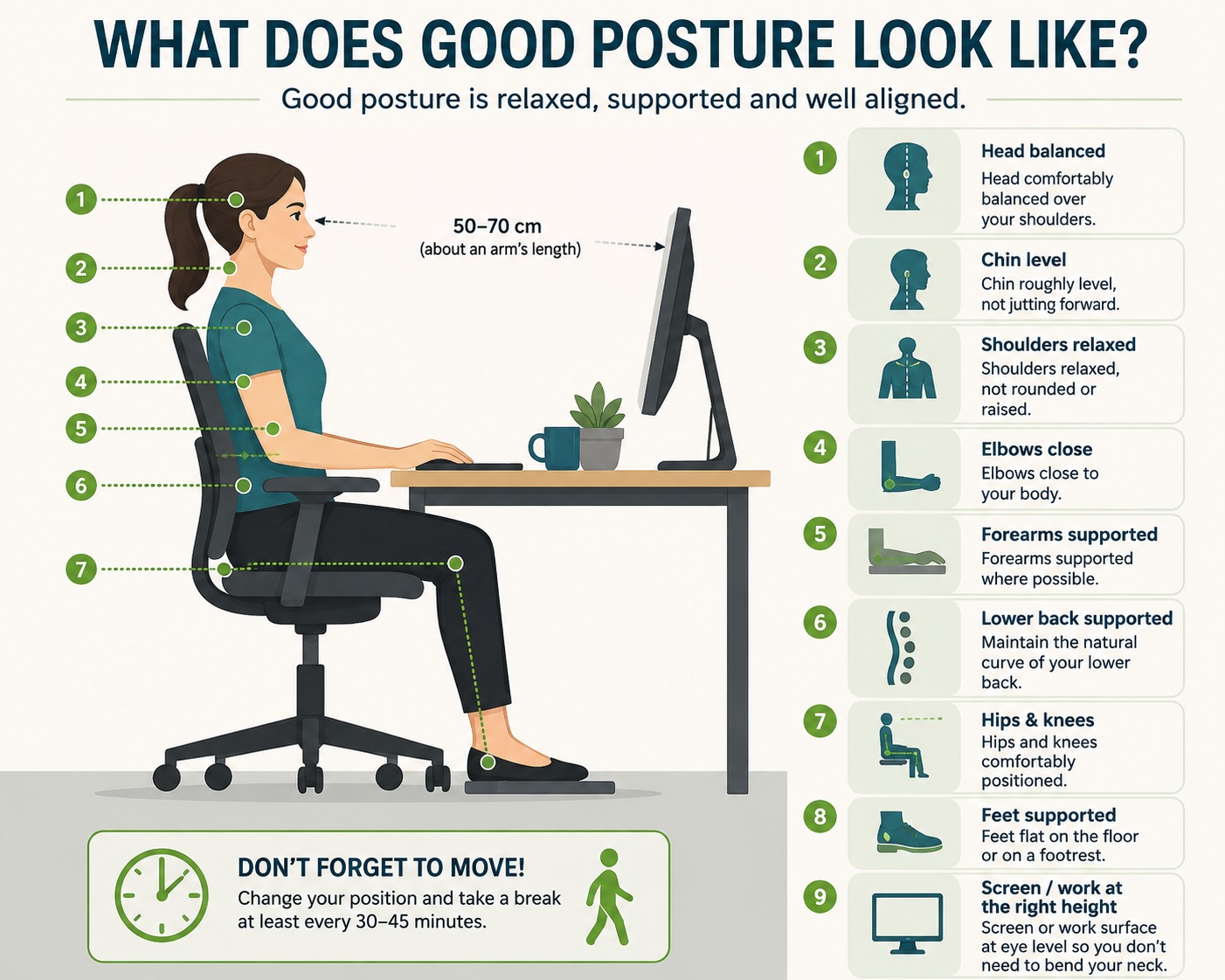
When sitting, aim for:
Most importantly, avoid staying in exactly the same position for hours at a time.
Setting Up a Computer Workstation
Your chair should provide comfortable support without forcing you into one rigid position.
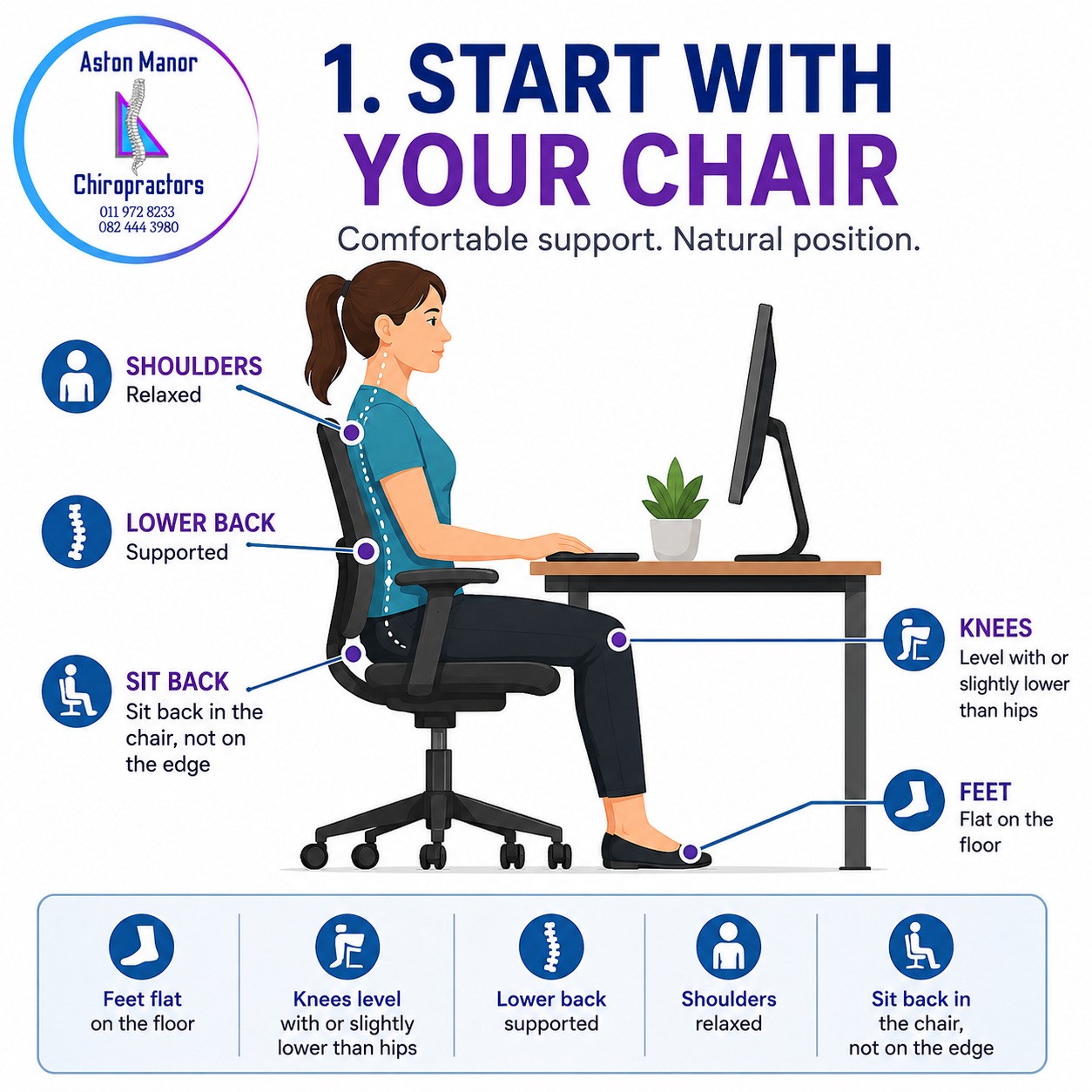
If your feet don't reach the floor comfortably, use a footrest rather than allowing your legs to dangle.
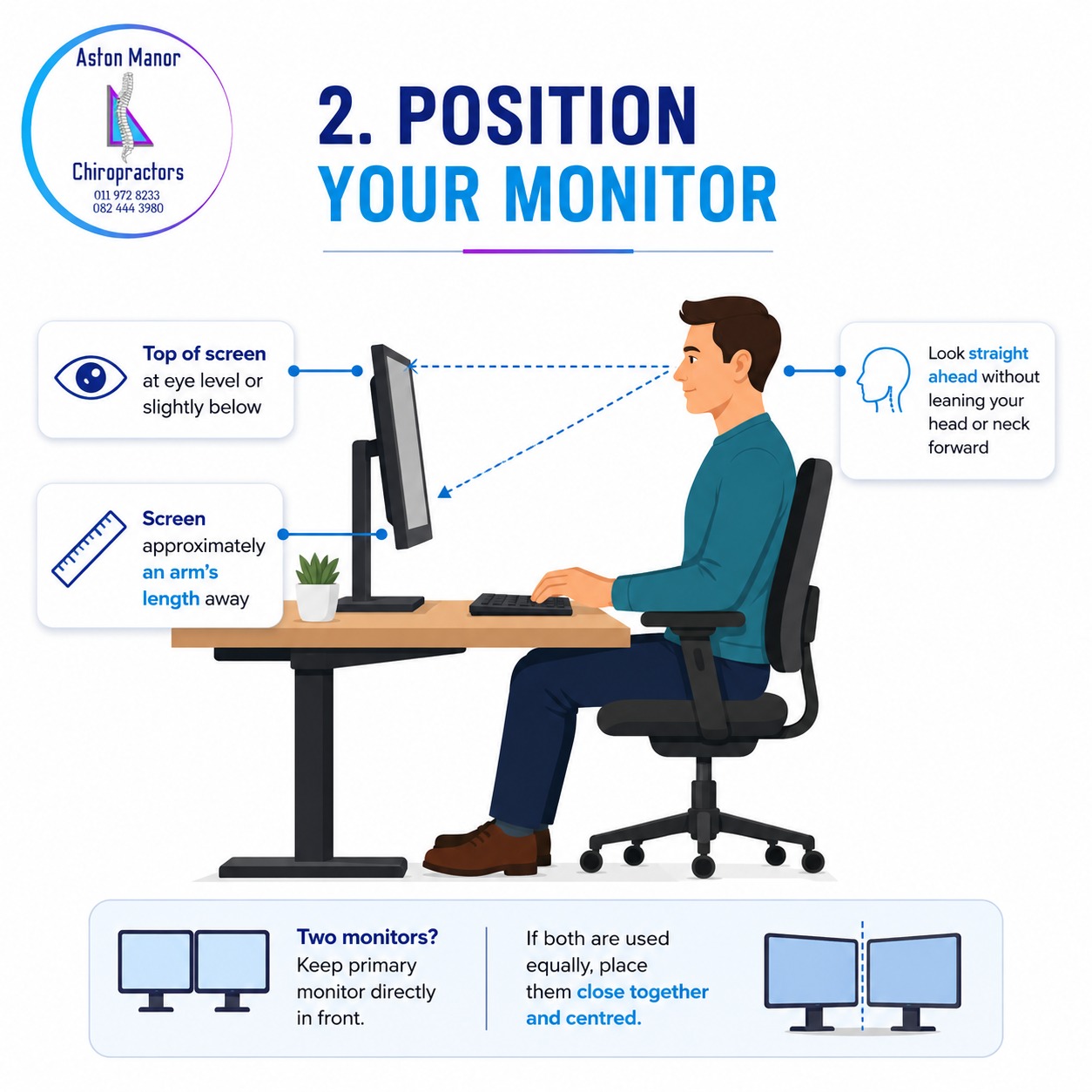
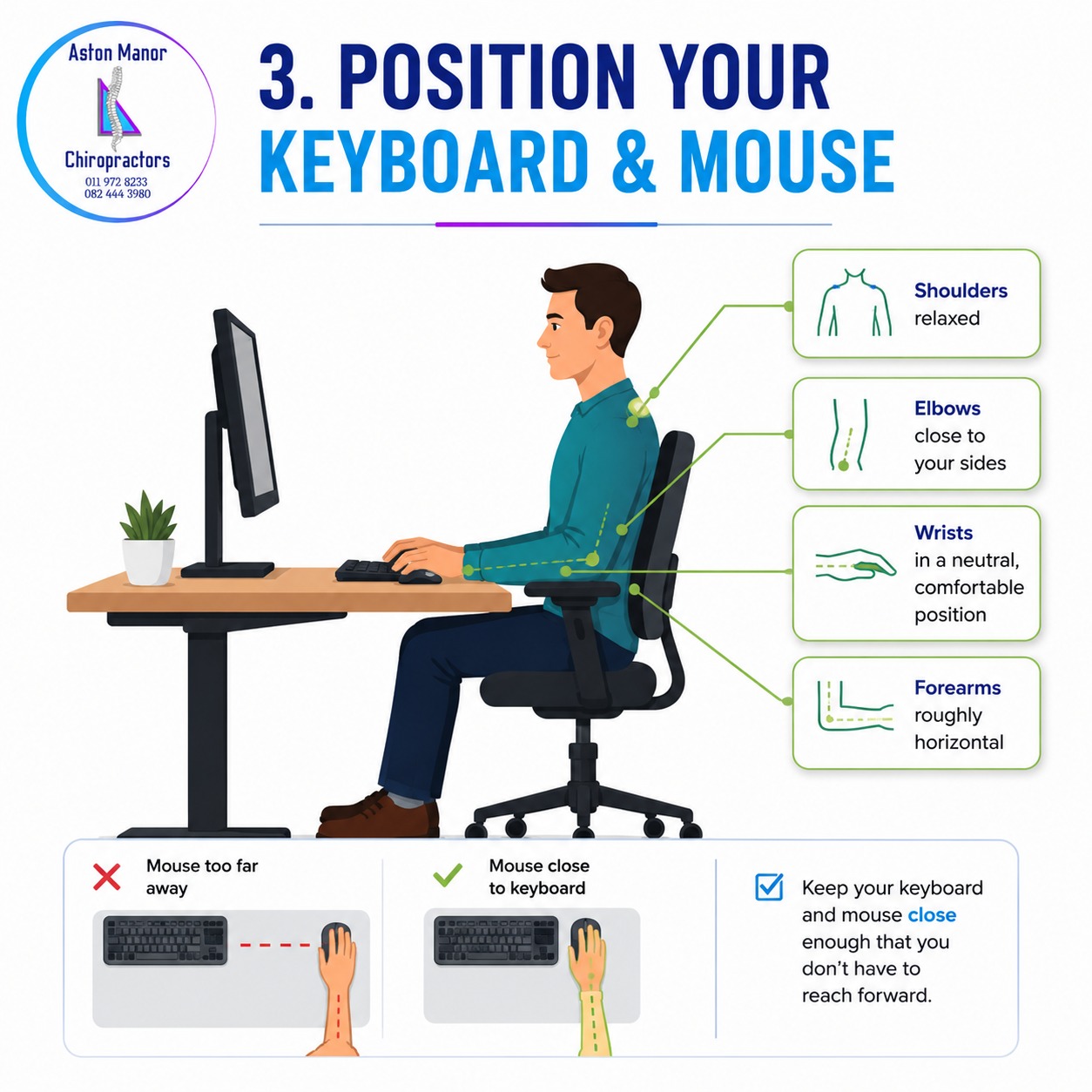
A common problem is having the mouse too far away. This can cause the shoulder to remain slightly lifted or stretched forward for hours. Your keyboard and mouse should be close enough that you don't have to reach forward.
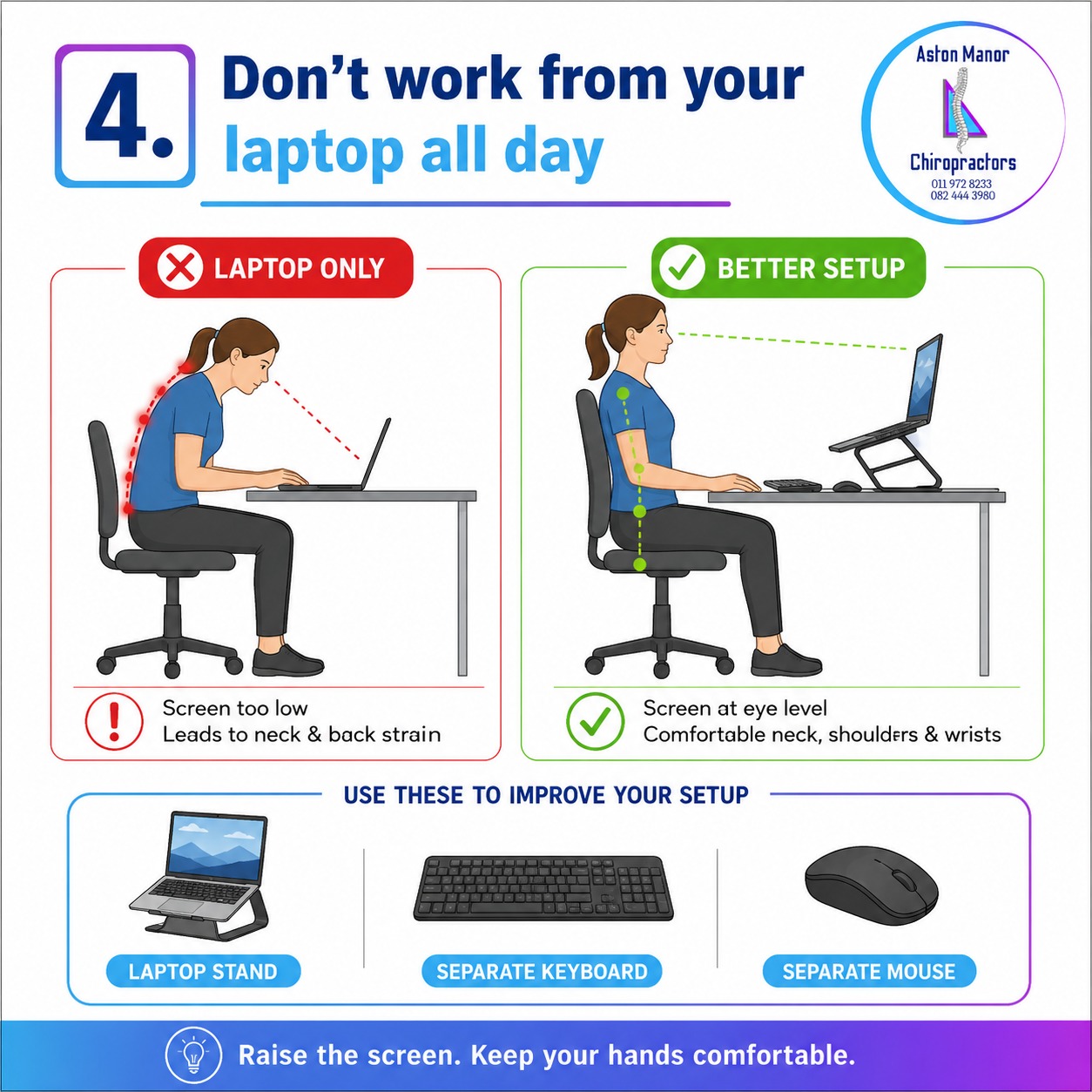
Laptops are convenient, but their screen and keyboard are attached to each other. This makes it difficult to position both at an ideal height.
Your Workstation Doesn't Have to Be a Desk
Many people develop posture problems while doing activities that aren't traditionally considered "desk work."
Think about how you spend your time.
You might spend several hours:
The same basic principles apply.
Your workspace should allow you to see and reach what you are doing without repeatedly bending, twisting or reaching.
Setting Up a Sewing or Craft Station
Sewing, knitting, crocheting and other crafts can be surprisingly demanding on your neck, shoulders and upper back.
The temptation is to lean forward so that you can see your work clearly.
Instead:
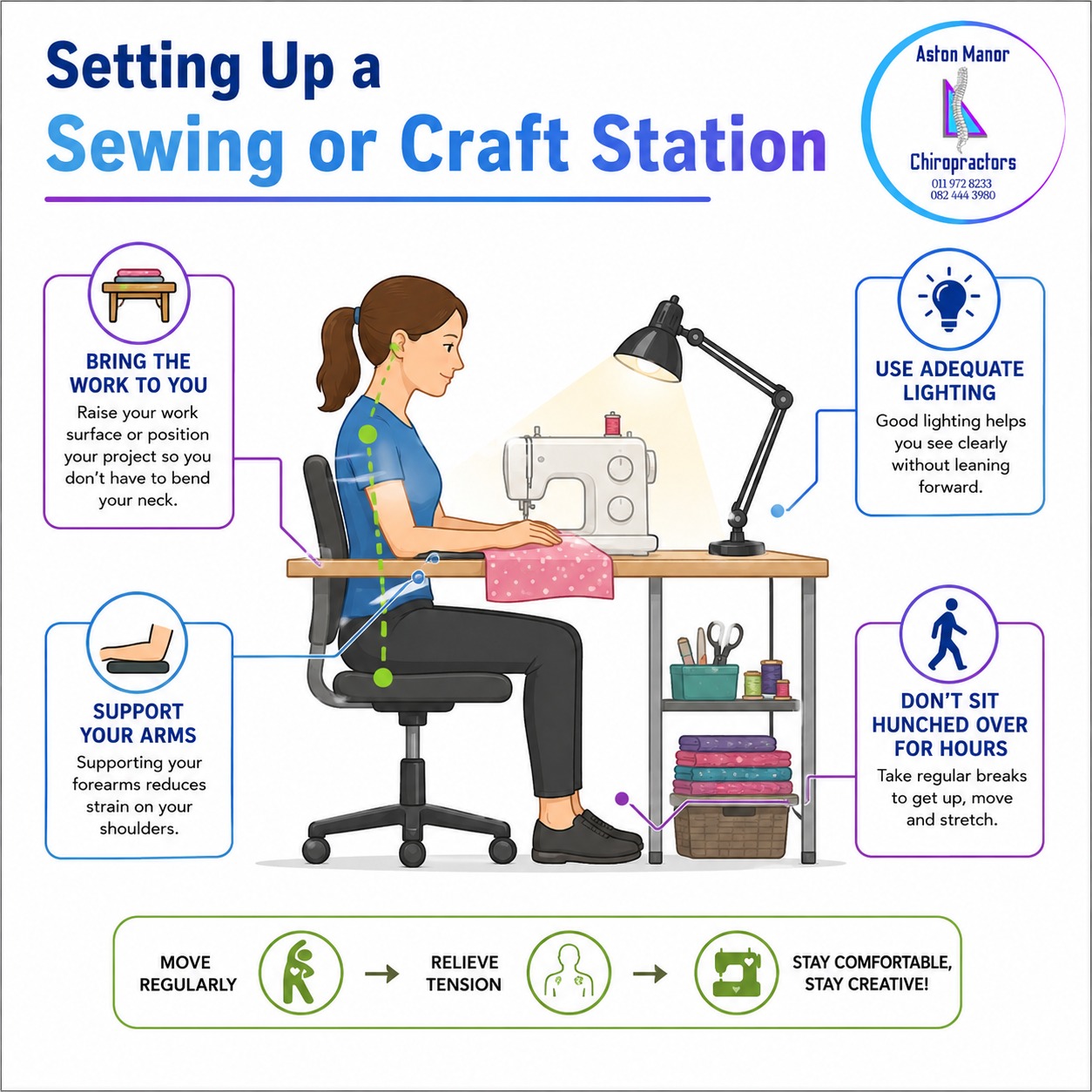
Bring the work to you: where possible, raise the work surface or position the project so that you don't have to constantly bend your neck.
Use adequate lighting: Poor lighting makes you more likely to lean forward or bring your work closer to your face. A good task light can make a significant difference.
Support your arms: If you are doing detailed work for long periods, supporting your forearms can reduce the amount of static tension in your shoulders.
Don't sit hunched over for hours: Even if your sewing chair and table are perfectly adjusted, staying in one position for three hours is not ideal.
Get up, walk around and gently move your neck, shoulders and back regularly.
Reading, Puzzles and Other Seated Hobbies
Reading a book or doing a puzzle may seem harmless, but these activities can encourage a prolonged head-forward and rounded-shoulder position.
Instead of holding a book or puzzle piece down in your lap:
You don't need to sit perfectly upright every second. The important thing is not remaining bent forward for long periods without changing position.
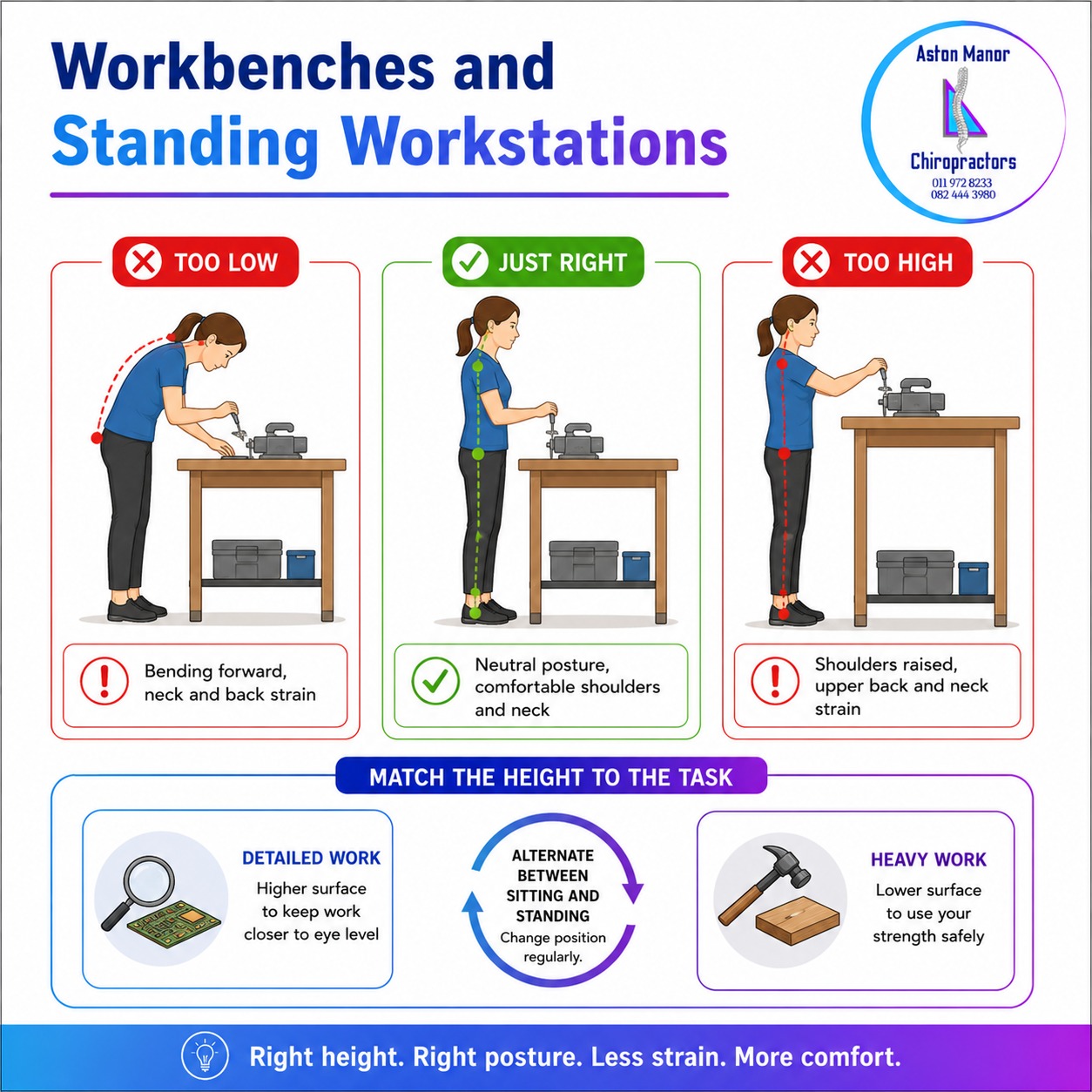
Workbenches and Standing Workstations
Standing does not automatically mean better posture.
Your work surface should be appropriate for the type of work you are doing.
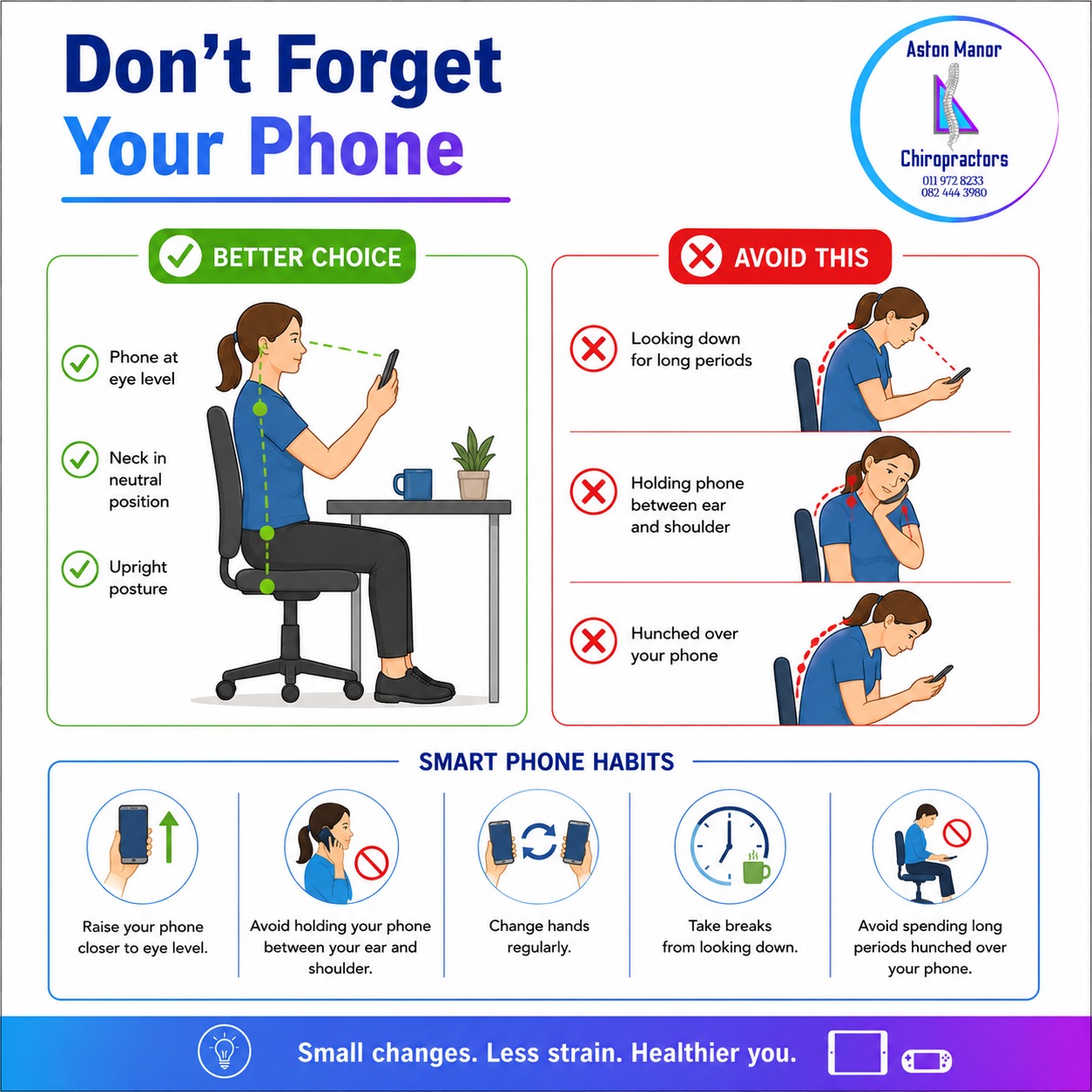
Don't Forget Your Phone
Set a Timer to Move
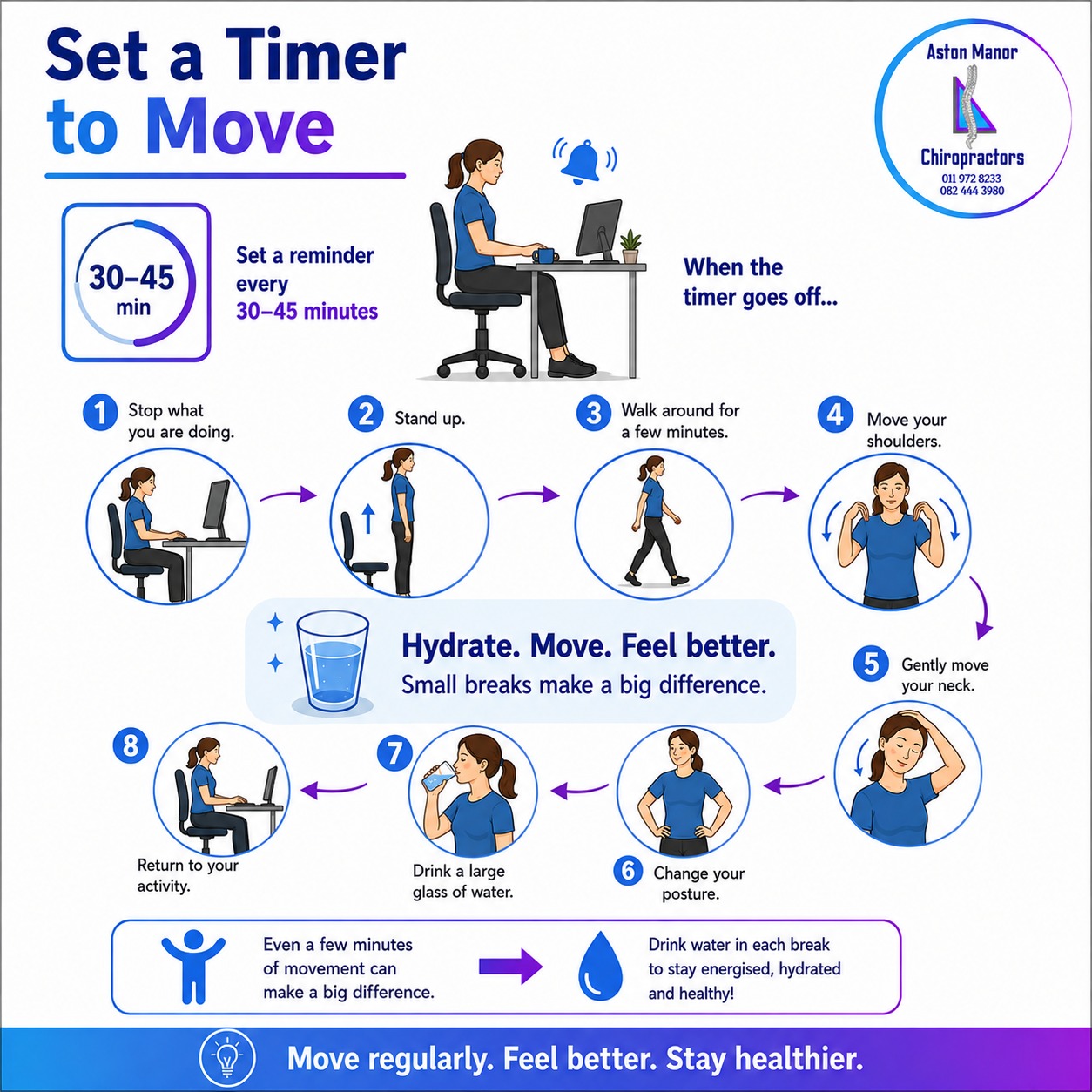
One of the simplest and most effective changes you can make is to set a timer to remind yourself to move.
When you are concentrating on work or a hobby, it is very easy to sit in the same position for much longer than you realise.
Consider setting a reminder for approximately 30–45 minutes, and place it out of your reach.
When the timer goes off:
Even a few minutes of movement can help break up prolonged static positioning.
A Simple "Posture Check" for Any Workstation
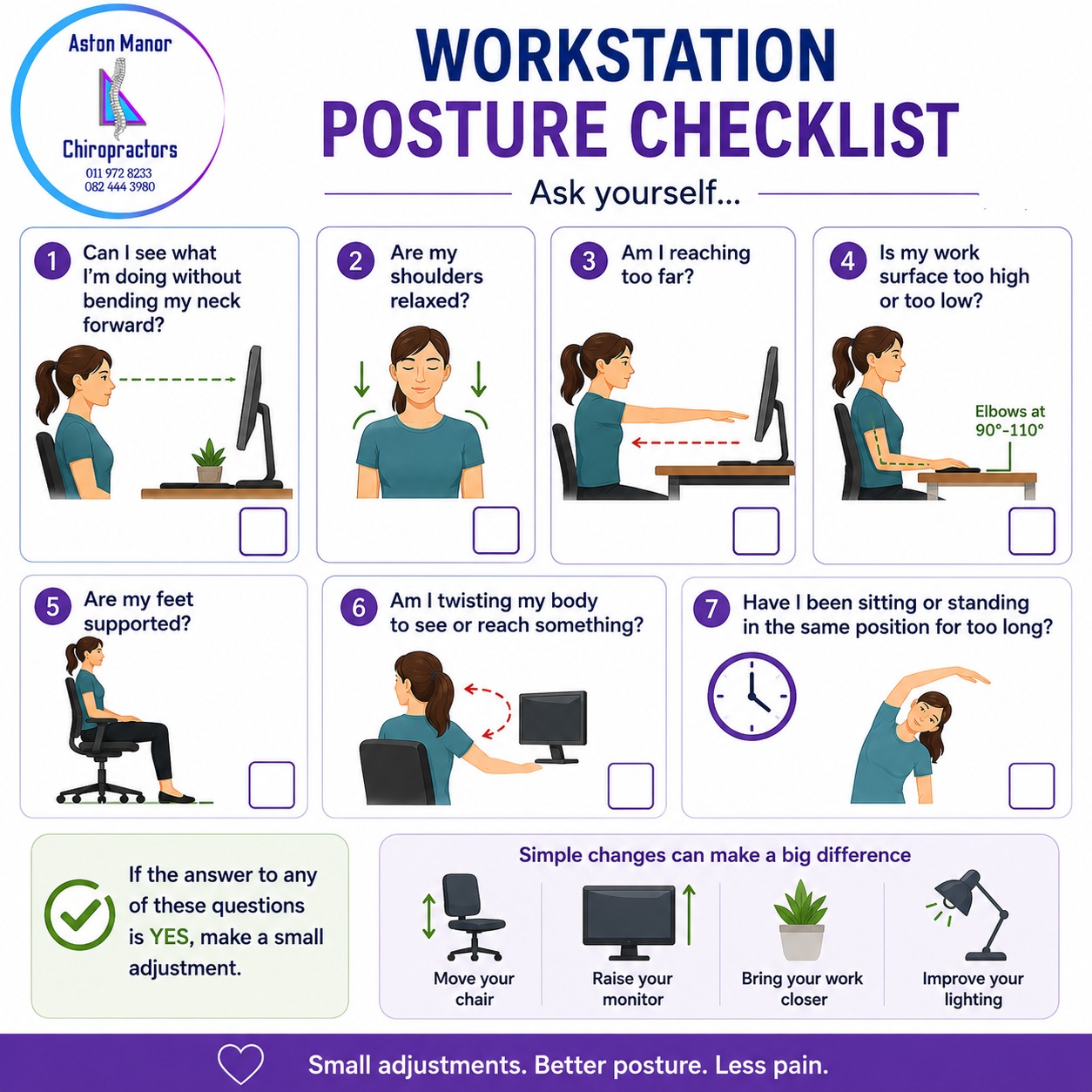
The Most Important Ergonomic Rule:
Keep Moving
There is no single "perfect posture" that you should maintain all day.
Even an excellent workstation can become uncomfortable if you remain in exactly the same position for several hours.
Think about posture as movement rather than a position.
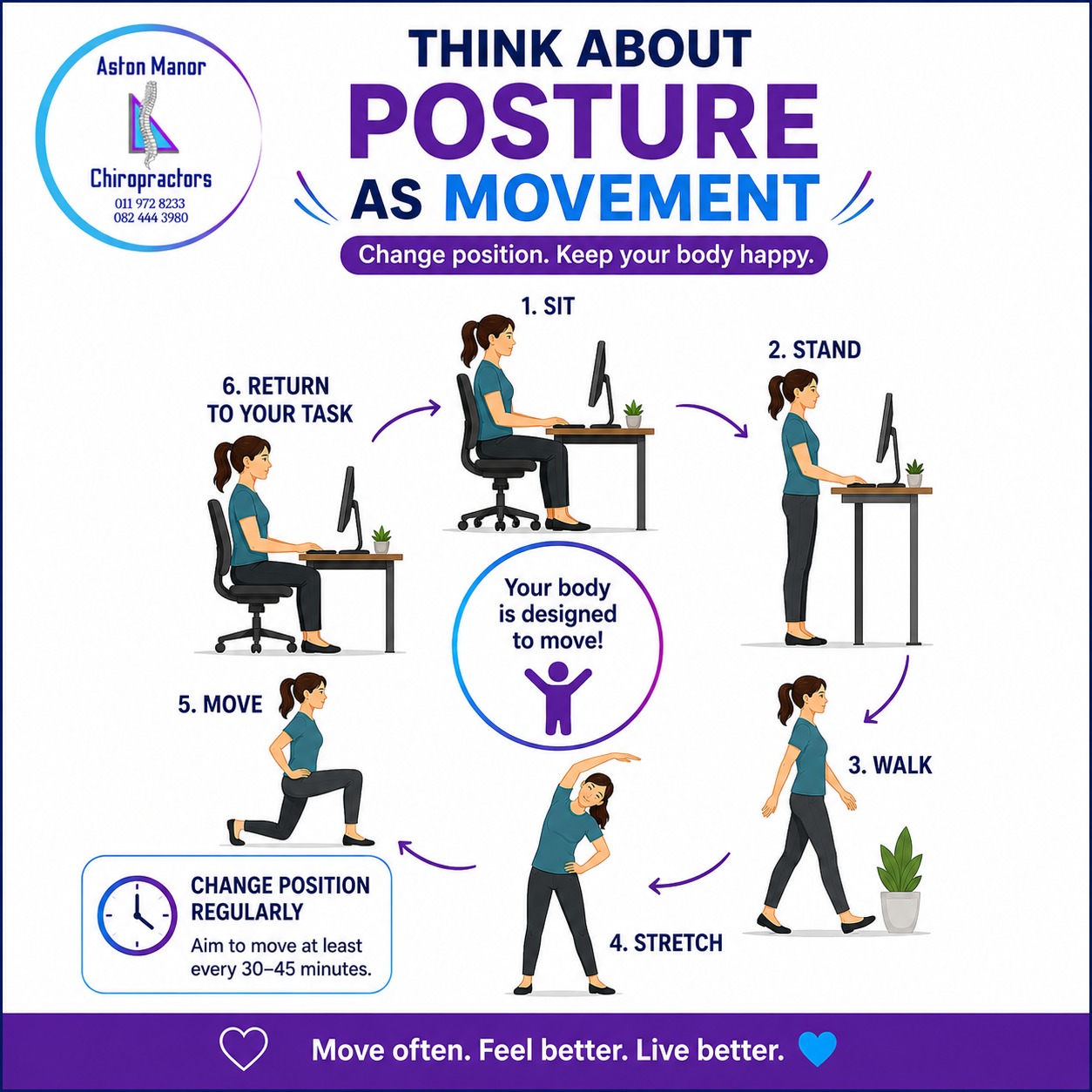
Your body is designed to move, and regularly changing position is one of the simplest ways to reduce the strain associated with prolonged sitting or repetitive activities.
When Should You Get Your Pain Assessed?
Occasional stiffness after a long day is common. However, persistent or worsening pain should not simply be accepted as part of working at a desk or enjoying your hobbies.
Consider having your pain assessed if you experience:
At Aston Manor Chiropractors, we can assess your spine, joints, muscles and movement patterns to help identify factors that may be contributing to your pain and determine an appropriate treatment approach.
A Better Workstation Starts With Small Changes
You don't need to completely redesign your office, hobby room or workshop.
Start with the basics:
Set up your workspace → support your body → improve your lighting → bring your work to you → avoid prolonged static positions → set a timer → get up and move regularly.
Small changes made consistently can make your workspace more comfortable and help you look after your neck, shoulders and back while doing the things you need — and enjoy — every day.
A good workstation should work for your body, not force your body to work around it.
Begin Your Care
Our Office hours is Weekdays, 8:00-17:00
Join us on our WhatsApp channel for daily tips and information about how to live a healthier and pain-free life.
This information is for general educational purposes and does not replace an individual assessment by a qualified healthcare professional.