Good posture while gardening can help reduce unnecessary strain on your back and joints, allowing you to work more comfortably and enjoy your garden for longer.
Although gardening is a leisure activity for most, it is a common place for injuries.
Keeping a check on your posture will make a world of difference. Gardening does not have to be a back-breaking hobby. In fact, it is very good for you on a multitude of different levels.
Gardening tips:
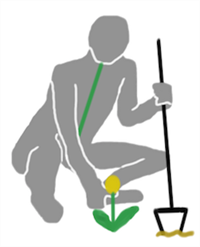
At all times keep your body straight, by imagining that a wire is pulling you up through the top of your head.
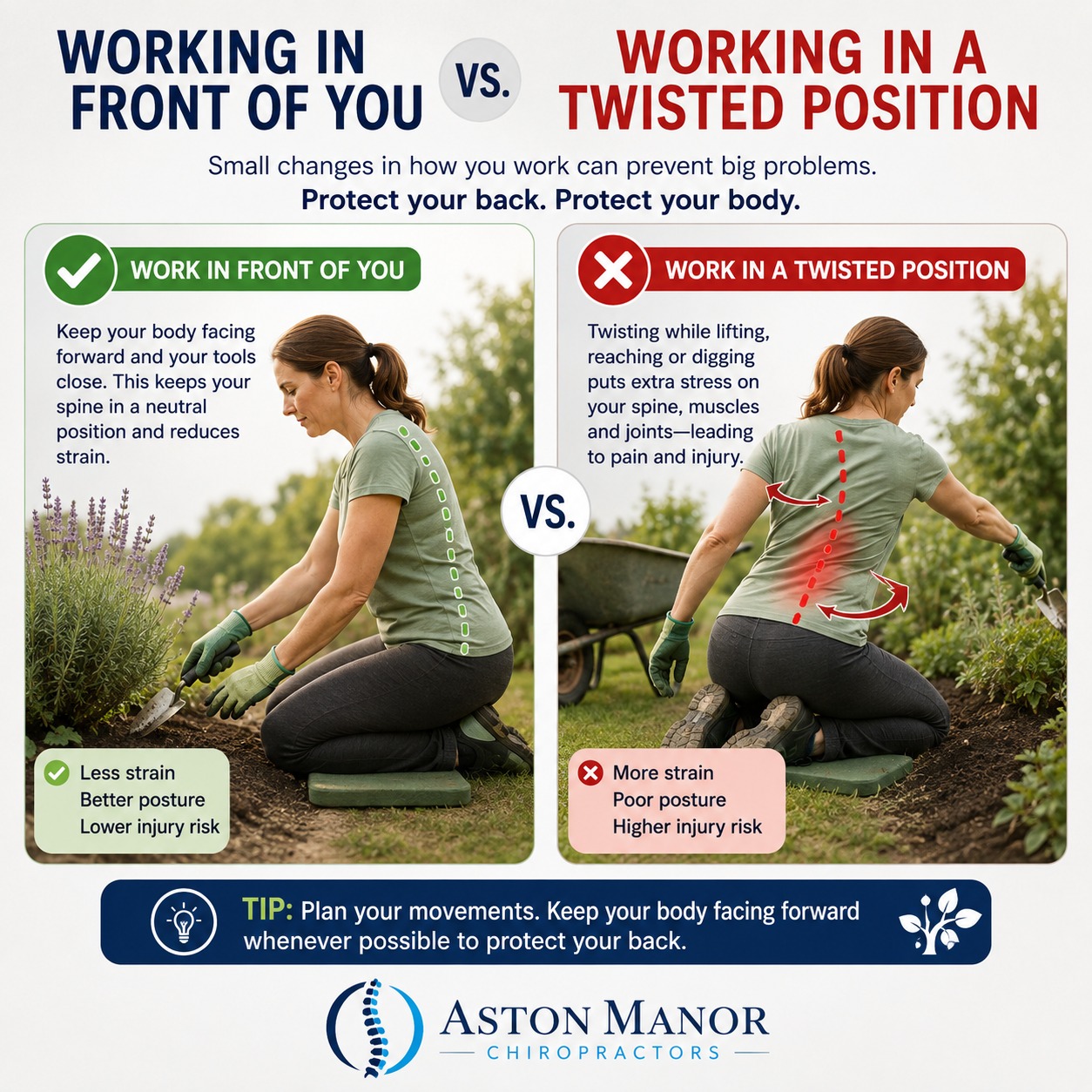
Always work directly in-front of you, and not in a twisted
position.
Switching sides frequently while gardening helps prevent overloading the same muscles and joints repeatedly. Alternating sides spreads the workload more evenly, reduces fatigue and strain, and can help lower the risk of developing aches or overuse injuries.
Alternating between different gardening tasks every 20 minutes gives your muscles and joints a chance to recover before they become fatigued. Rotating between two or three jobs also reduces repetitive strain and helps prevent stiffness, soreness and overuse injuries.
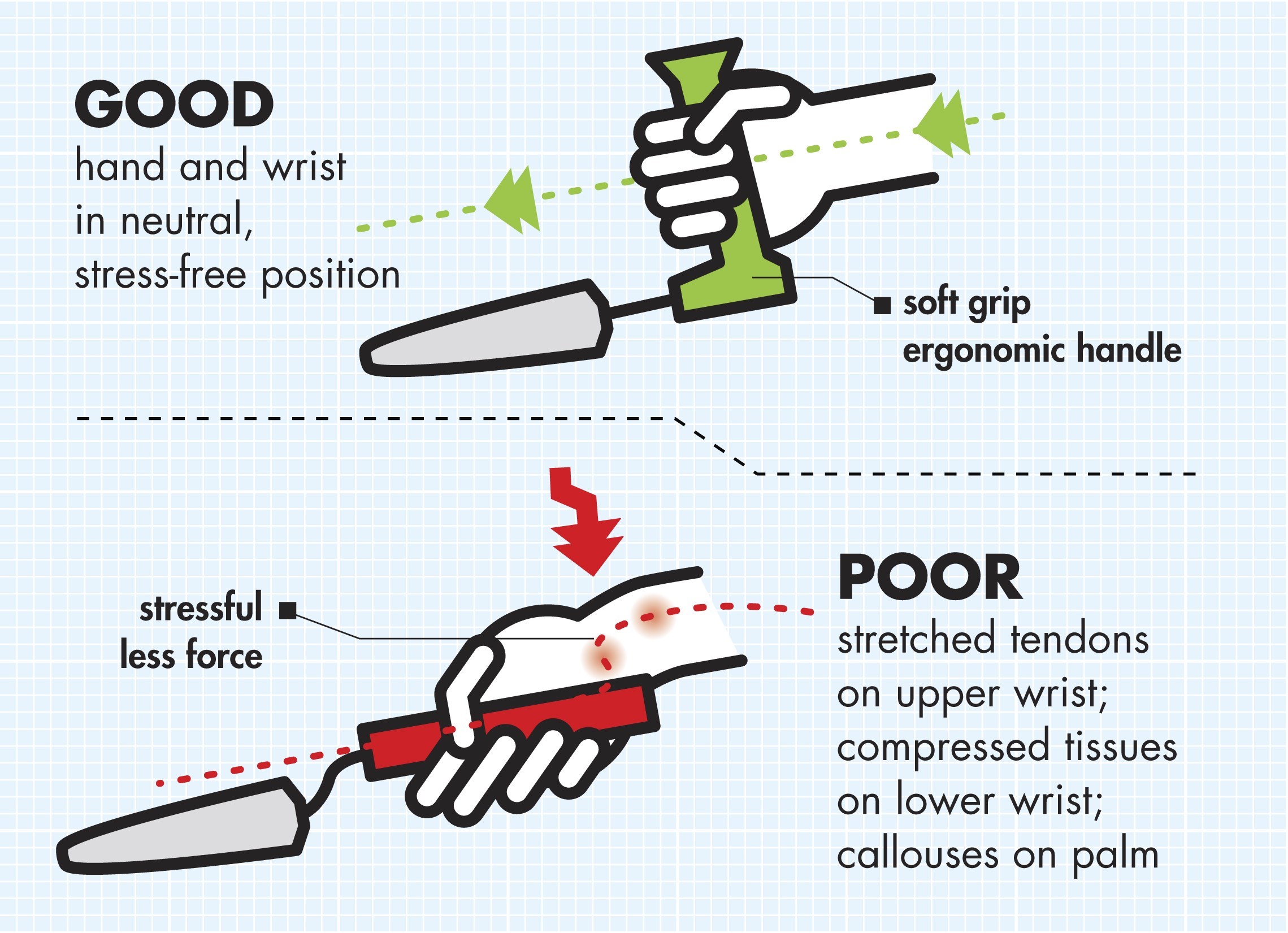
Using the right tool for each gardening job can make the task easier, safer and less demanding on your body. Proper tools can reduce excessive bending, reaching, gripping and lifting, helping to prevent unnecessary strain. For example, use long-handled tools for reaching the ground, a lightweight secateur for pruning, a kneeling pad for planting, and a wheelbarrow or garden trolley for moving heavy loads.
Keeping your gardening tools clean, well-maintained and sharp makes each job easier and safer. Sharp secateurs, shears and spades require less force, reducing strain on your hands, wrists, shoulders and back. Well-maintained tools also work more efficiently, helping you avoid unnecessary effort and awkward movements.
Being smart about how you tackle gardening tasks can greatly reduce the weight and strain placed on your body. Look for ways to make the job easier rather than simply working harder. For example, use a hosepipe instead of carrying a heavy watering can, use a wheelbarrow or garden trolley to move soil and plants, split heavy loads into smaller amounts, and use smaller pots or containers that are easier to lift. Small changes like these can make gardening much more comfortable and help prevent unnecessary strain.
A good garden cart or dolly can take the strain out of moving heavy or awkward loads, reducing the need for lifting and carrying. Using wheels to move bags of soil, pots, plants, paving stones or garden waste helps protect your back, shoulders and knees, making difficult jobs safer and easier.
Splitting large or heavy loads into smaller amounts reduces the strain on your back, shoulders, arms and knees. Although it may take a little longer, carrying lighter loads is safer and easier to control, helping reduce the risk of muscle strains and other lifting injuries.
Choosing low-maintenance shrubs that require less pruning can reduce the amount of repetitive bending, reaching, lifting and cutting you need to do in the garden. This means less strain on your back, shoulders, neck and hands, while also making regular garden maintenance quicker and easier.
Planting groundcovers can help reduce the amount of weeding and replanting needed in your garden. By covering bare soil, they can naturally suppress weeds and reduce the need to repeatedly bend, kneel and pull weeds by hand. This means less repetitive strain on your back, knees, hands and shoulders, making garden maintenance easier.
Minimising difficult areas that are hard to reach or work in can significantly reduce awkward postures, twisting, bending and over-reaching.
When planning your garden, make jobs easier by placing raised beds at a comfortable working height, keeping plants where they can be reached from the path, and avoiding planting in tight corners or behind large shrubs.
Use wider paths, leave enough space between plants for access, and position containers where they can be easily reached without kneeling or stretching.
These small changes can make routine gardening safer, easier and less demanding on your body.
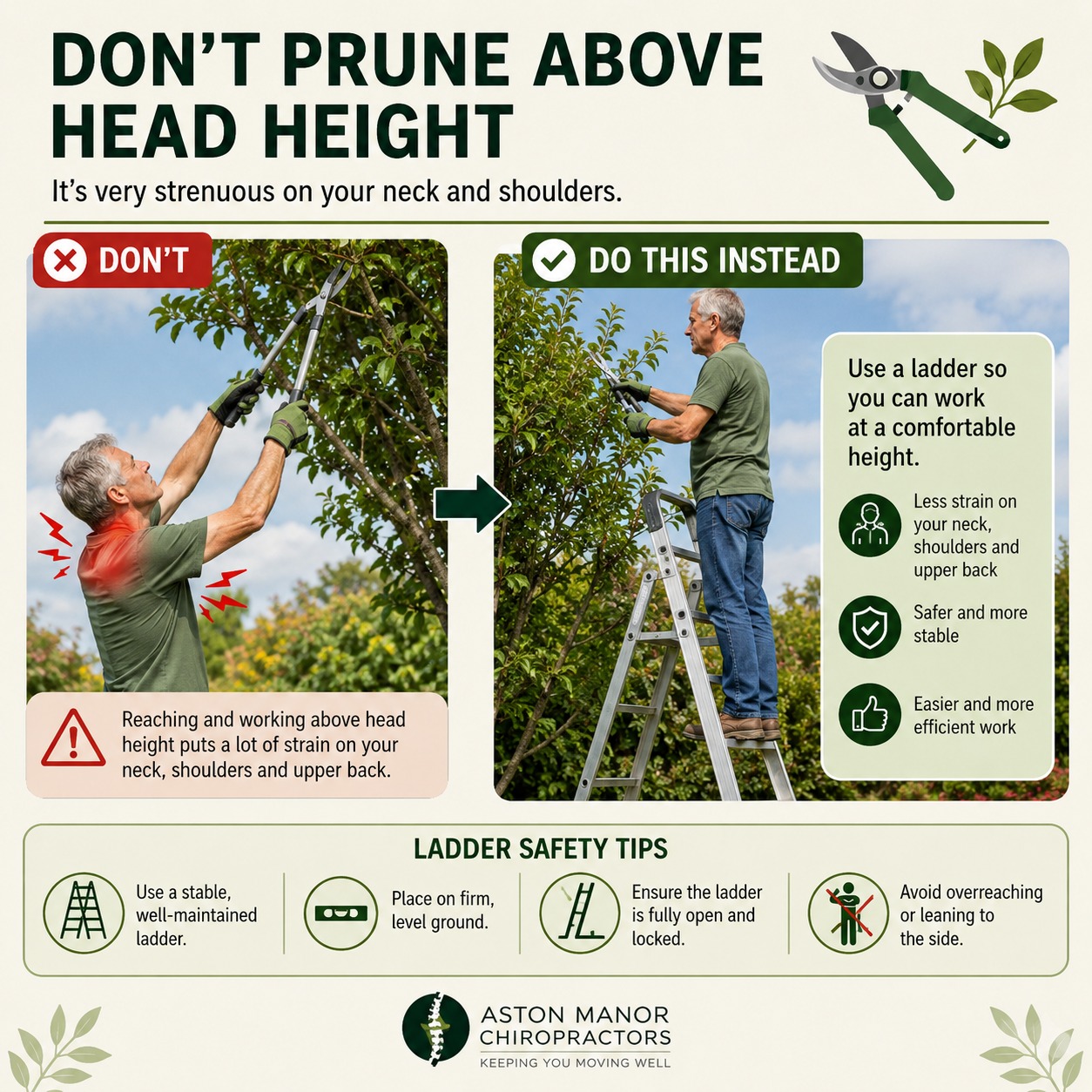
Pruning above head height can place a lot of strain on your neck, shoulders and upper back, especially when reaching or holding tools overhead for long periods. Instead, use a stable, properly positioned ladder so you can work at a comfortable height. Make sure the ladder is on firm, level ground, is fully secure before climbing, and avoid overreaching or leaning to the side.
Planning gardening tasks for the easiest conditions can significantly reduce the effort and strain on your body. For example, dig when the ground is damp rather than hard and dry, choose cooler parts of the day for strenuous work, and tackle jobs when you have enough time to work without rushing. Working with the conditions, rather than against them, makes gardening easier and helps reduce the risk of injury.
Digging
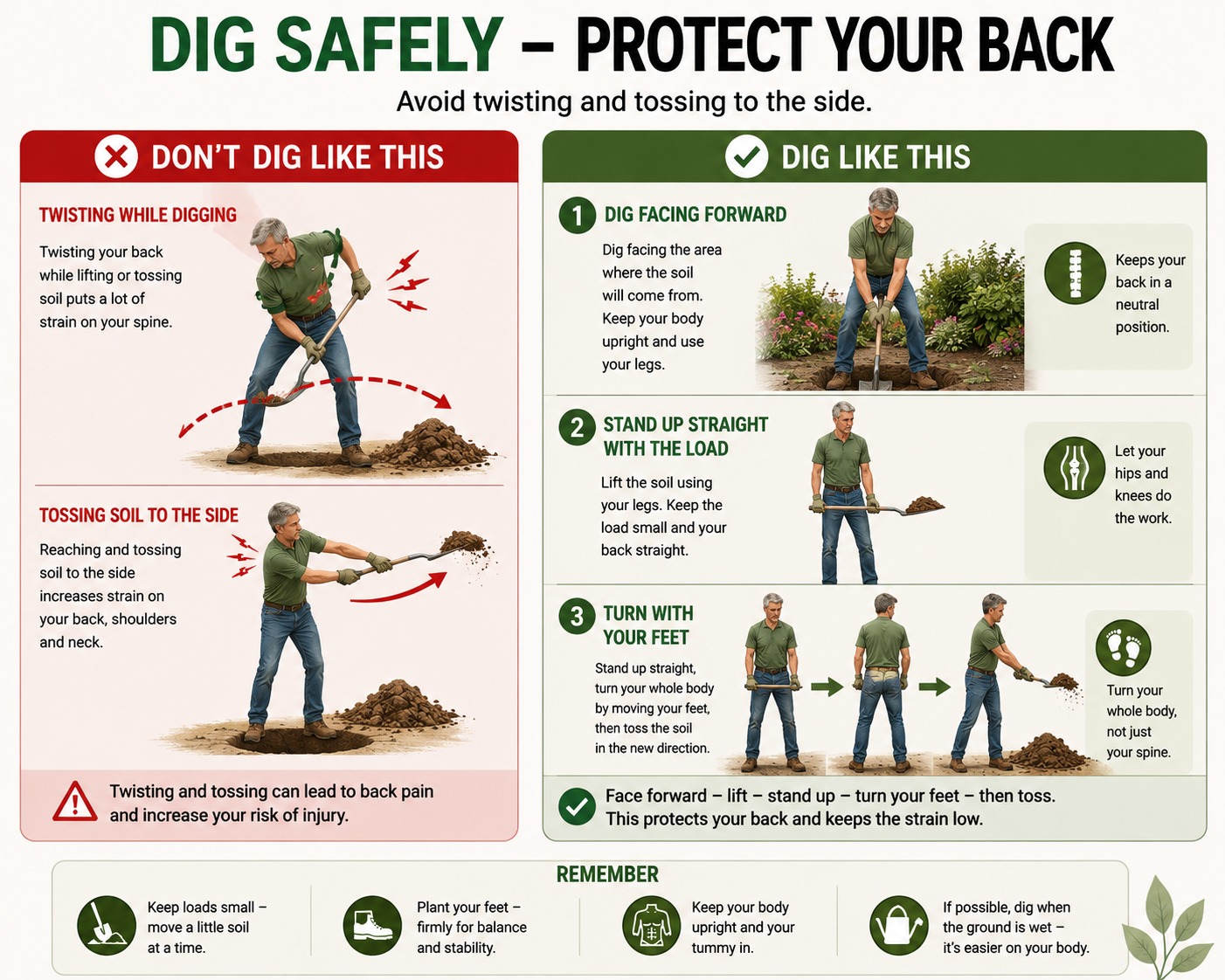
Digging can place significant strain on your lower back, shoulders and knees, particularly when the soil is hard or when lifting large amounts of earth.
Avoid digging where possible by choosing low-maintenance planting options or using tools that make the job easier.
When digging is necessary, plant your feet firmly, keep the load of soil small, and avoid twisting while lifting. Let your hips and knees generate the power rather than bending and pulling with your back.
Keep your body as upright as possible, gently brace your abdominal muscles, and turn your whole body with your feet rather than rotating through your spine.
Work in short periods and take regular breaks to avoid fatigue.
Lifting & Carrying
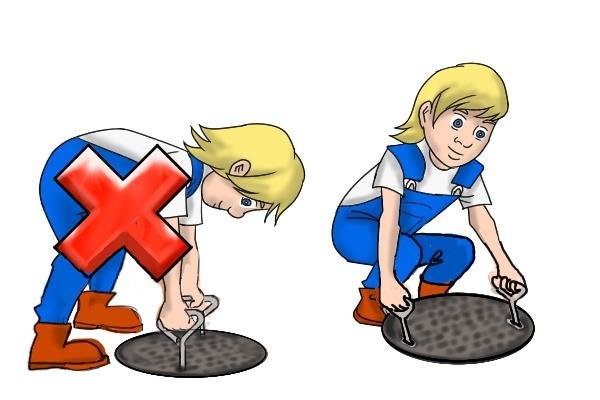
When lifting in the garden, use your hips and knees rather than your lower back to generate the power.
Gently brace your tummy during the lift, keep the load close to your body, and avoid twisting while carrying it.
For heavy or awkward items, ask for help rather than struggling on your own.
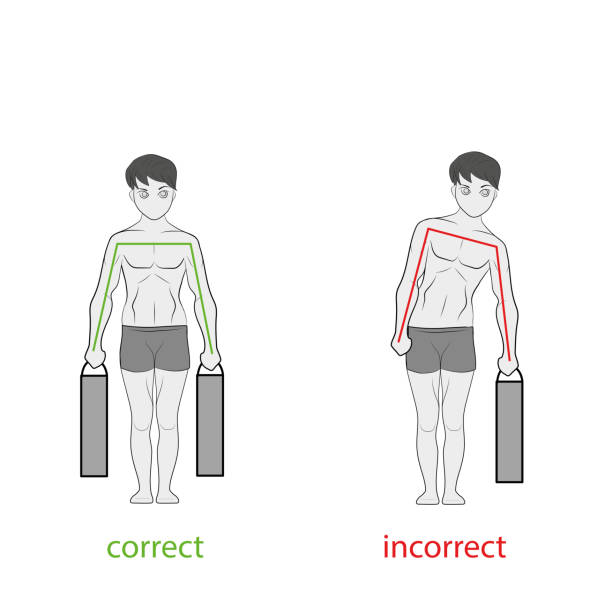
Try not to carry loads over long distances—instead, use a garden cart, trolley or wheelbarrow to reduce the strain on your back, shoulders and joints.
Rather carry two smaller loads than one large load.
Sweeping & Raking
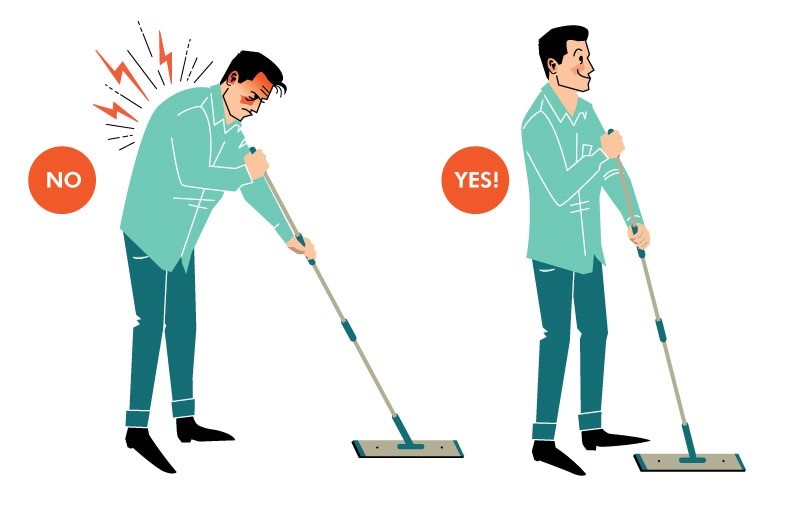
Using long-handled tools can reduce unnecessary bending, reaching and strain on your back and shoulders.
Avoid swinging the tool from side to side using only your upper body, as this can put twisting stress through your spine.
Instead, move your feet and hips to face the direction you are working, keeping your body aligned and allowing your legs and hips to do more of the work.
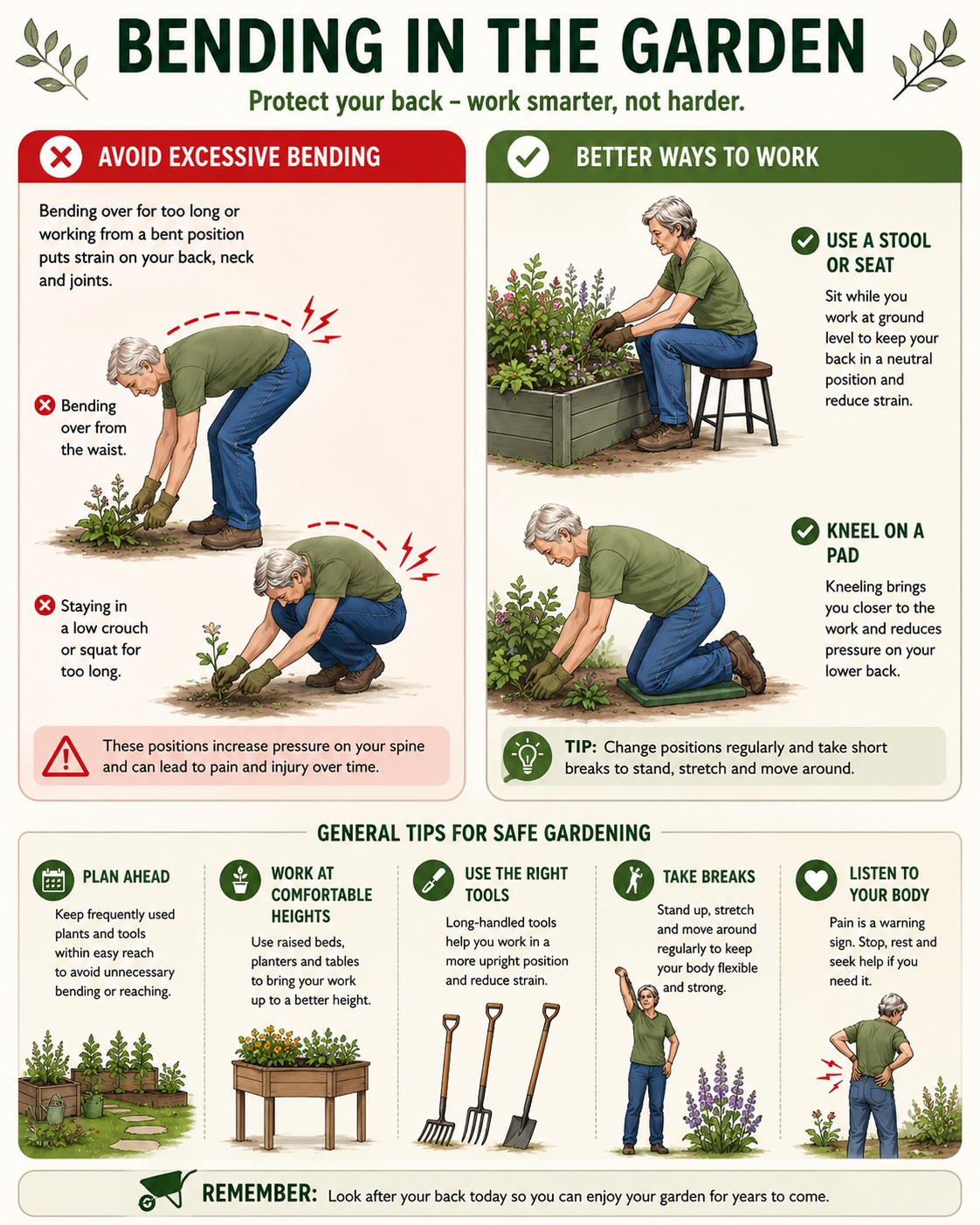
Bending
Always weed in-front of you.
Don’t over-reach, move closer.
Sit on the ground or on a bucket. Alternatively, kneel on a cushion, or kneel on one leg, resting your elbow on the upper leg.
Raised beds helps to reduce bending.
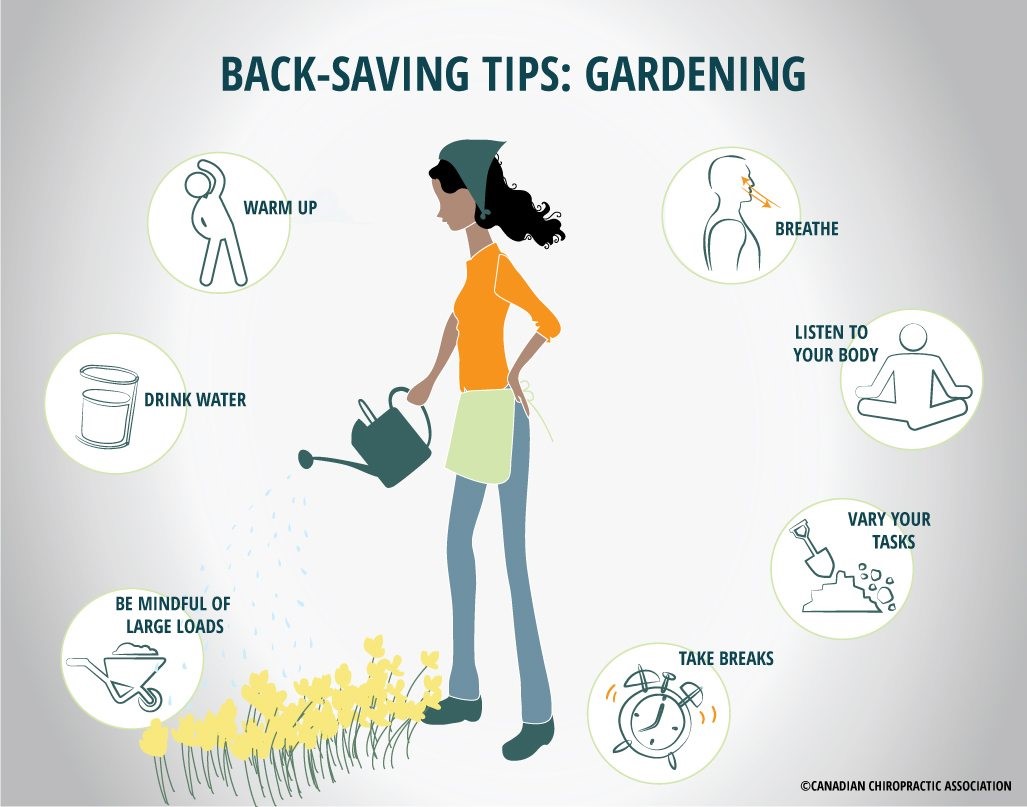
The 5 keys to getting the best from your gardening experience
Think posture ALL the time
Stay hydrated
Know your limits
Do NOT work through the pain
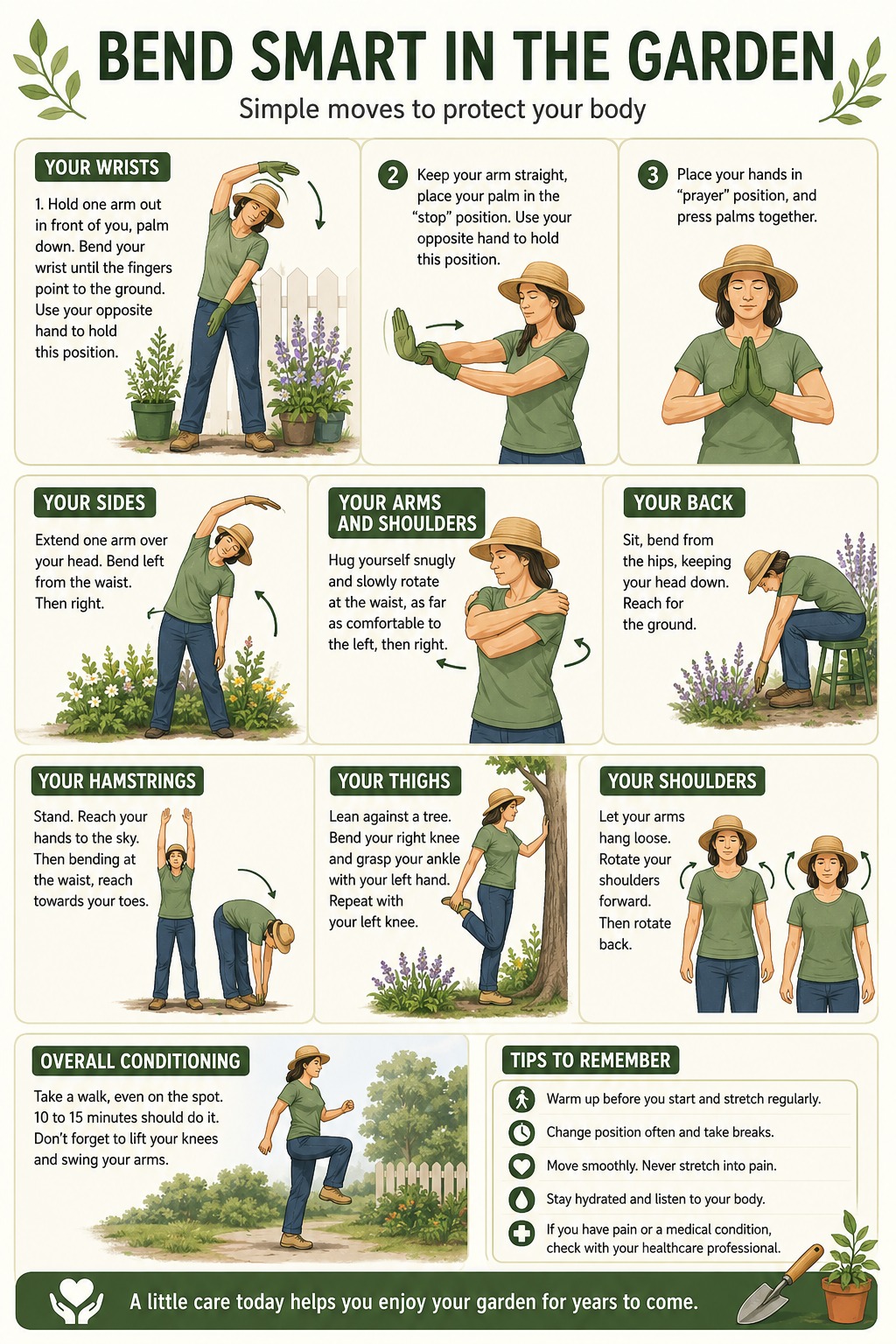
Always warm-up and stretch before staring
Getting the right treatment can help you get back to doing what you enjoy in the garden with greater comfort and confidence. Don’t let aches and pains gradually limit the jobs you can do—early attention can help address problems before they become more difficult to manage. Looking after your body is just as important as looking after your garden, helping you stay active, mobile and able to enjoy gardening for years to come.