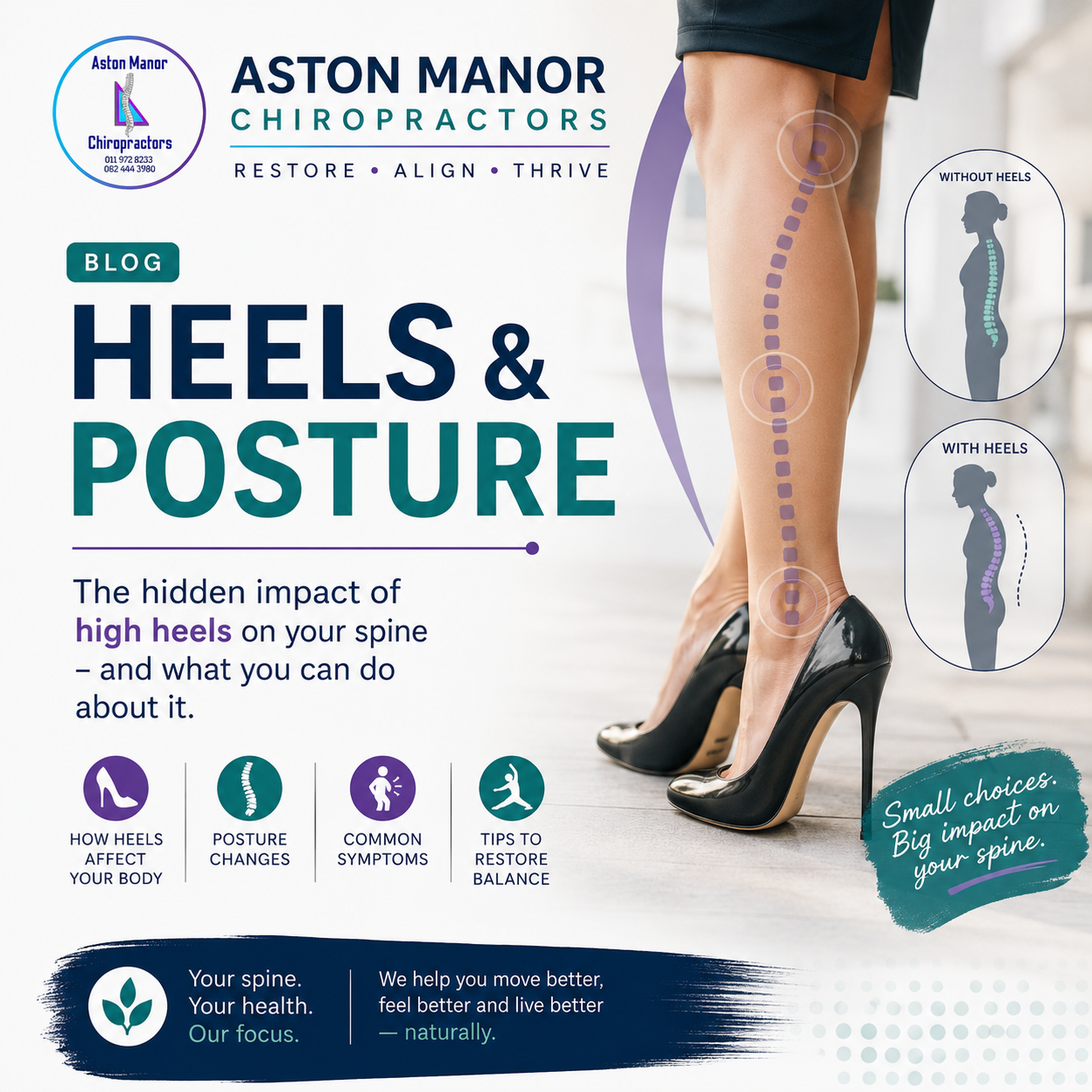

High Heels and the Effect on Your Posture
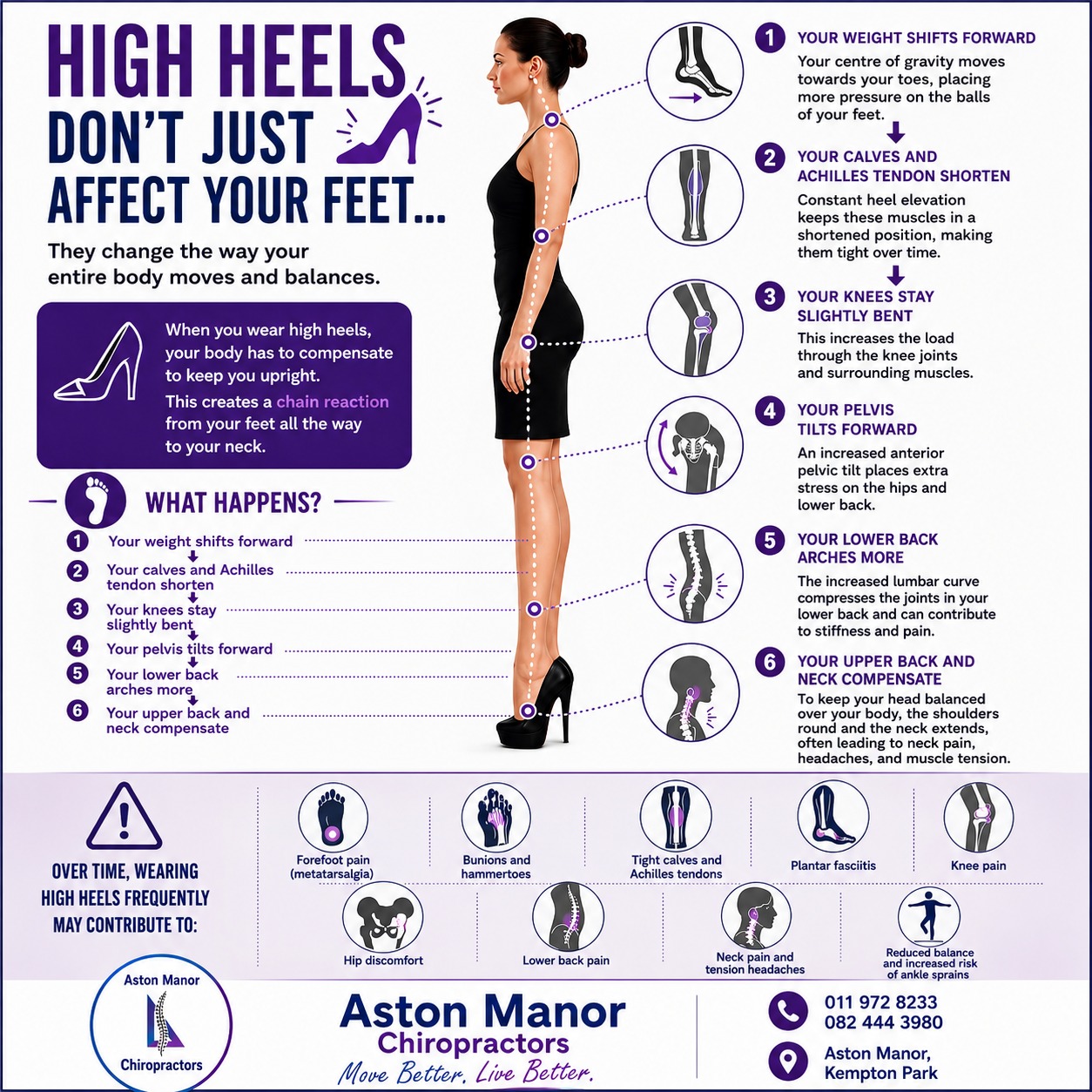
? What happens?
1️⃣ Your weight shifts forward; Your centre of gravity moves towards your toes, placing more pressure on the balls of your feet.
2️⃣ Your calves and Achilles tendon shorten; Constant heel elevation keeps these muscles in a shortened position, making them tight over time.
3️⃣ Your knees stay slightly bent; This increases the load through the knee joints and surrounding muscles.
4️⃣ Your pelvis tilts forward; An increased anterior pelvic tilt places extra stress on the hips and lower back.
5️⃣ Your lower back arches more; The increased lumbar curve compresses the joints in your lower back and can contribute to stiffness and pain.
6️⃣ Your upper back and neck compensate; To keep your head balanced over your body, the shoulders round and the neck extends, often leading to neck pain, headaches, and muscle tension.
? Over time, wearing high heels frequently may contribute to:
? Forefoot pain (metatarsalgia)
? Bunions and hammertoes
? Tight calves and Achilles tendons
? Plantar fasciitis
? Knee pain
? Hip discomfort
? Lower back pain
? Neck pain and tension headaches
? Reduced balance and increased risk of ankle sprains
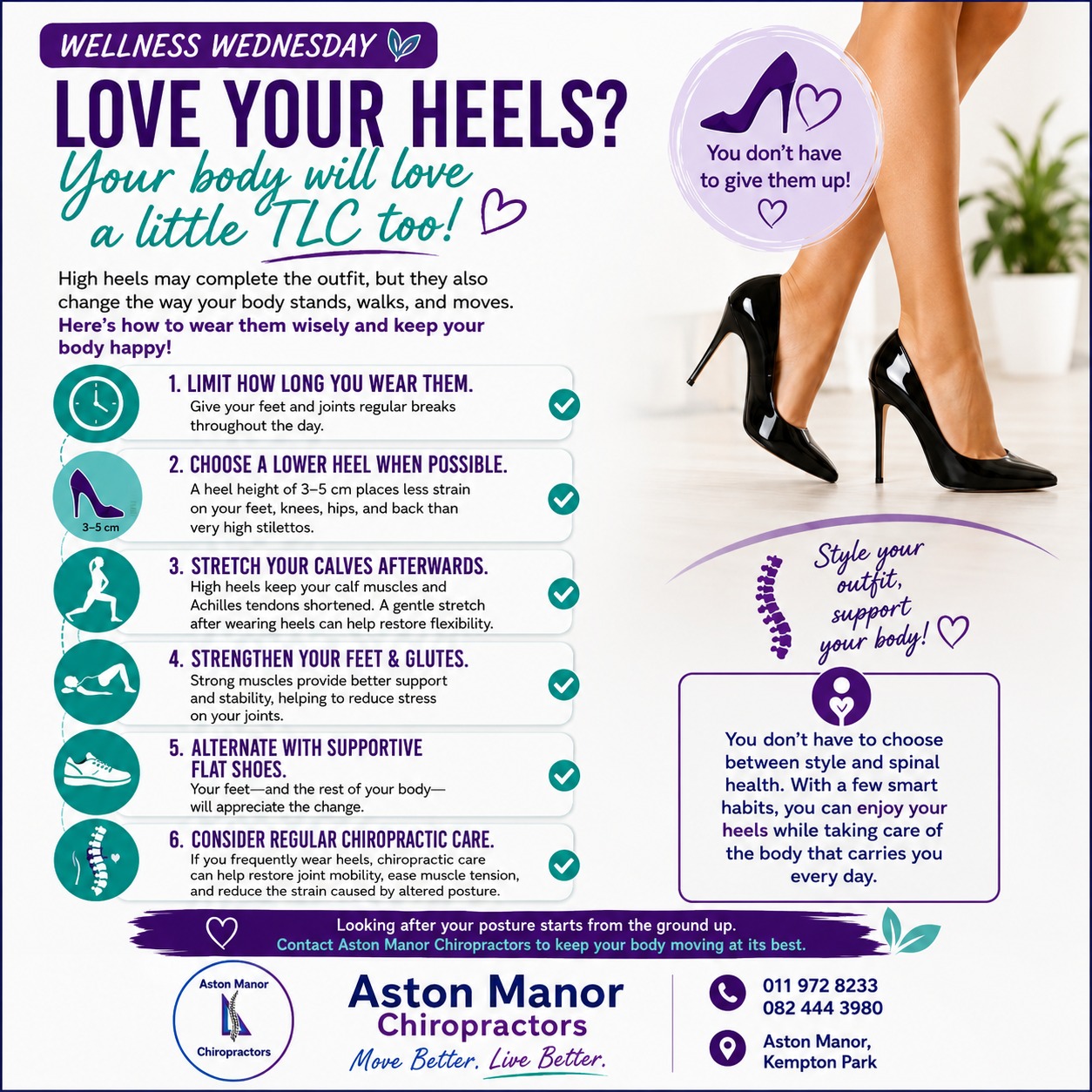
High heels may complete the outfit, but they also change the way your body stands, walks, and moves. The good news? You don't have to give them up—you just need to wear them wisely!
Here are a few simple ways to keep your body happy while enjoying your favourite heels:
?**Limit how long you wear them.** Give your feet and joints regular breaks throughout the day.
? **Choose a lower heel when possible.** A heel height of 3–5 cm places less strain on your feet, knees, hips, and back than very high stilettos.
? **Stretch your calves afterwards.** High heels keep your calf muscles and Achilles tendons shortened. A gentle stretch after wearing heels can help restore flexibility.
? **Strengthen your feet and glutes.** Strong muscles provide better support and stability, helping to reduce stress on your joints.
? **Alternate with supportive flat shoes.** Your feet—and the rest of your body—will appreciate the change.
? **Consider regular chiropractic care.** If you frequently wear heels, chiropractic care can help restore joint mobility, ease muscle tension, and reduce the strain caused by altered posture.
✨ You don't have to choose between style and spinal health. With a few smart habits, you can enjoy your heels while taking care of the body that carries you every day.
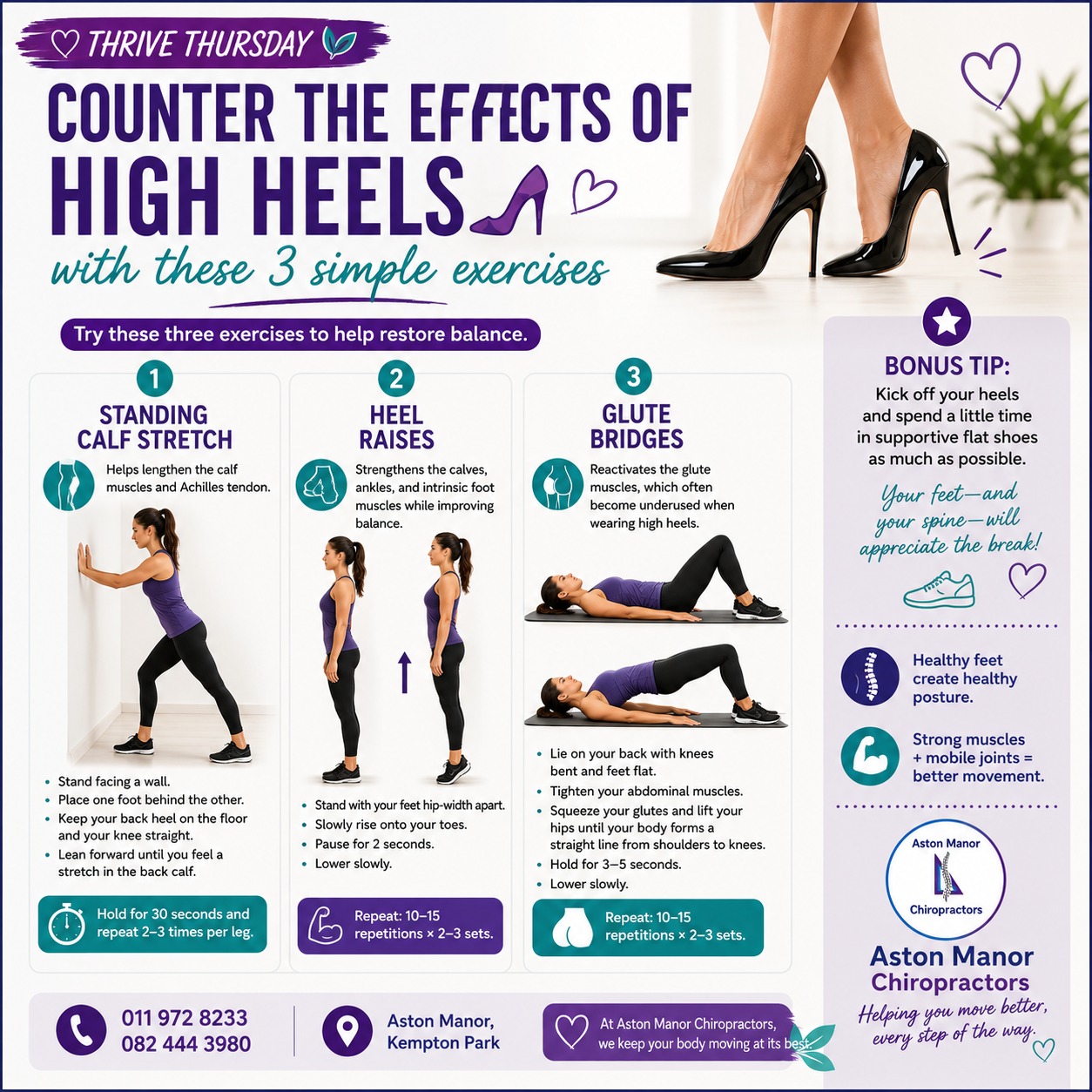
1️⃣ Standing Calf Stretch ? Helps lengthen the calf muscles and Achilles tendon. • Stand facing a wall. • Place one foot behind the other. • Keep your back heel on the floor and your knee straight. • Lean forward until you feel a stretch in the back calf. • Hold for **30 seconds** and repeat **2–3 times** per leg.
2️⃣ Heel Raises ? Strengthens the calves, ankles, and intrinsic foot muscles while improving balance. • Stand with your feet hip-width apart. • Slowly rise onto your toes. • Pause for 2 seconds. • Lower slowly. **Repeat:** 10–15 repetitions × 2–3 sets.
3️⃣ Glute Bridges; Reactivates the glute muscles, which often become underused when wearing high heels. • Lie on your back with knees bent and feet flat. • Tighten your abdominal muscles. • Squeeze your glutes and lift your hips until your body forms a straight line from shoulders to knees. • Hold for 3–5 seconds. • Lower slowly. **Repeat:** 10–15 repetitions × 2–3 sets.
✨ Bonus Tip: Kick off your heels and spend a little time in supportive flat shoes as much as possible.
Your feet—and your spine—will appreciate the break! Healthy feet create healthy posture.
Strong muscles + mobile joints = better movement.
Schedule an Appointment
Practice Hours: Monday–Friday | 8:00 AM – 5:00 PM
Join us on our WhatsApp channel for daily tips and information about how to live a healthier and pain-free life.